Thinking, Fast and Slow
Key takeaways
- Two systems run your mind: fast intuition and slow reasoning
- What you see is all there is — we judge from incomplete evidence
- Losses hurt about twice as much as equivalent gains please
- The remembering self, not the experiencing self, makes your decisions
Inside this bit
- Two systems
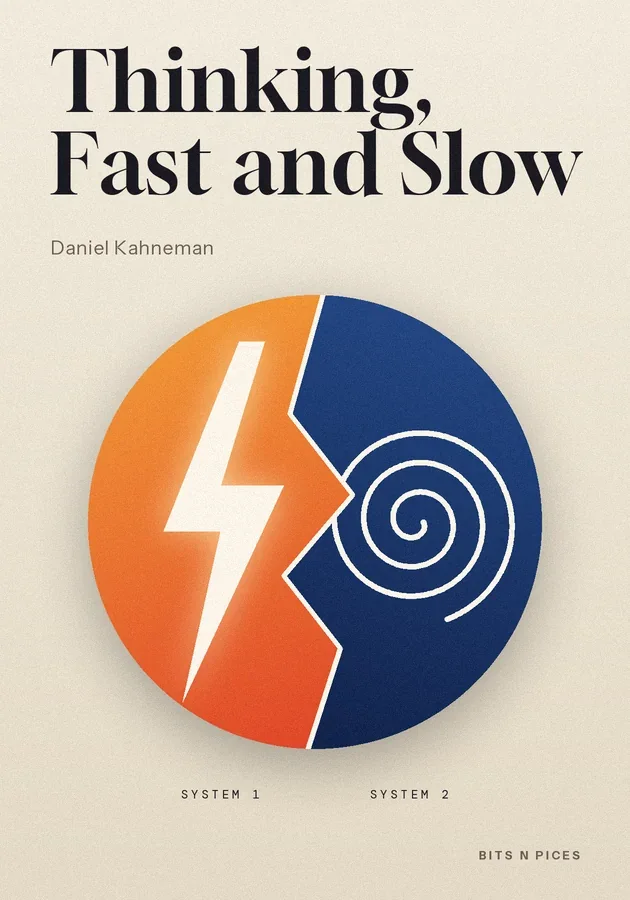
Kahneman describes the mind as two characters. System 1 is fast, automatic, effortless — it reads emotions, completes '2+2', swerves the car.
- Heuristics and biases
When facing a hard question, System 1 quietly substitutes an easier one. 'Is this investment sound?
- Prospect theory
Kahneman's Nobel-winning work with Amos Tversky showed humans don't evaluate outcomes; we evaluate gains and losses from a reference point — and losses loom roughly twice as large as gains. This explains why we hold losing stocks too long, buy insurance and lottery tickets simultaneously, and reject fair bets.
- Two selves
Your experiencing self lives your life; your remembering self writes the story — and the story is ruled by peaks and endings, not duration. A painful procedure that ends gently is remembered as better than a shorter one that ends sharply.
Learn it six ways
Visualize, Mind Map, Practice, Scenario, Challenge and Review are written for this book.
Narrated
Listen to this bit, read by Michael or Bella.
Quiz and flashcards
Test what you read and keep it with spaced repetition.
Bits AI
It answers about the book, the section, the quiz question you are on.