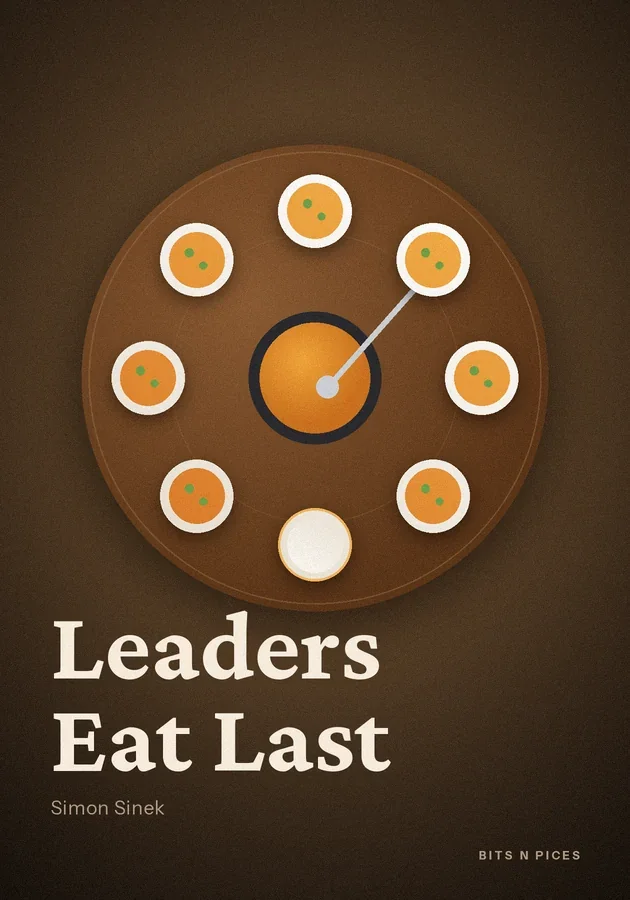
Leaders Eat Last
Puntos clave
- A leader's first job is to build a circle of safety so people can trust each other
- Teams perform when their energy goes into the work, not into protecting themselves from colleagues
- Four chemicals shape behaviour; endorphins and dopamine drive results, serotonin and oxytocin build trust
- Cortisol from constant threat destroys empathy, cooperation and health in an organisation
- Abstract numbers make cruelty easy; keep people real by knowing their names and stories
Dentro de este bit
- Why officers eat last
In the United States Marine Corps there is an unwritten custom at mealtime: the most junior marines eat first and the officers wait until everyone else has been served. Nobody orders it.
- El círculo de seguridad
Every human group lives with dangers from outside: competitors, a shrinking market, a new regulation. Sinek's key idea is that the real question is where the dangers inside the group come from.
- La química del trabajo en equipo
Sinek explains behaviour through four chemicals the body uses to reward us. Endorphins mask pain so we can push through hard effort.
- El cortisol y el coste del miedo
When we sense threat, cortisol floods the body to prepare us to fight or flee. It is useful for a moment in the jungle and poisonous over months in an office.
- Abstraction makes us cruel
Sinek revisits a famous psychology experiment in which ordinary people obeyed instructions to deliver painful shocks to a stranger they could not see. Distance made harm easy.
- Ponlo en práctica
This week, notice one moment when someone on your team admits a mistake, and respond in a way that makes it easier to do next time. Replace one metric driven update with a short conversation about what is actually getting in people's way.
Aprende de seis maneras
Visualizar, Mapa Mental, Práctica, Escenario, Desafío y Repaso están escritos para este libro.
Narrado
Escucha este bit, leído por Michael o Bella.
Cuestionario y flashcards
Pon a prueba lo que lees y reténlo con repetición espaciada.
Bits AI
Responde sobre el libro, la sección o la pregunta del cuestionario en la que te encuentras.