

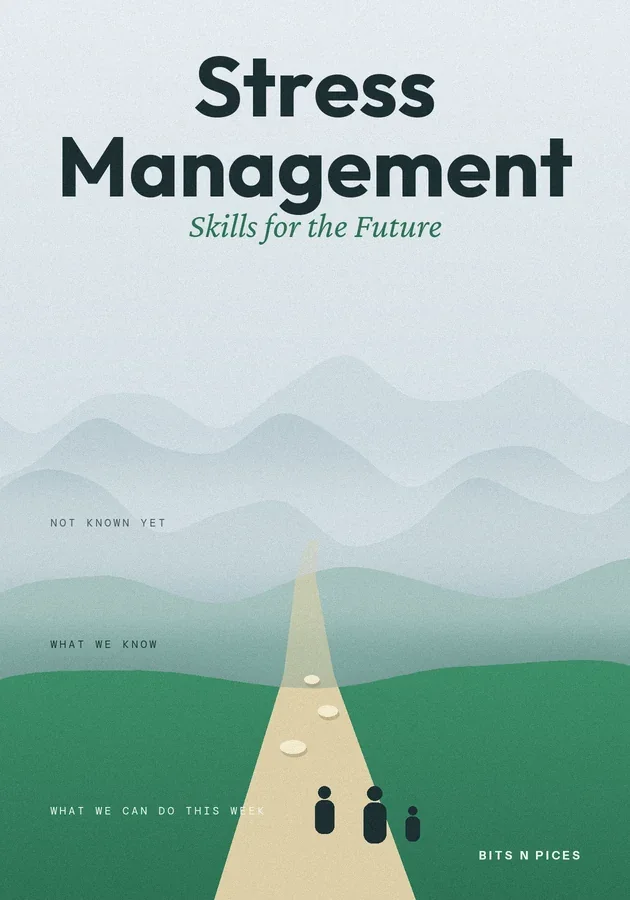
Stress Management: Skills for the Future
Puntos clave
- The next decade will bring faster change at work and at home, so the lasting skill is noticing stress early and steadying yourself on purpose.
- Name feelings out loud at home in plain, precise words such as rushed or worried, because children learn their emotional vocabulary by hearing yours.
- When the future feels uncertain, sort it as a family into what we know, what we do not know yet and what we can do this week.
- Treat stress scores from watches and apps as a prompt to check in with yourself, not as a verdict on how you feel.
- Practise rest, connection and asking for help where your children can see it, so they grow up treating them as normal rather than as failure.
Dentro de este bit
- Why the coming decade will test calm
No one can predict the next ten years in detail, but a few pressures are easy to see. Jobs will keep changing as software and automation take on more tasks.
- Skill one: naming what you feel
Stress is easier to handle once it has a precise name. People who can tell the difference between feeling rushed, disappointed, overloaded or nervous tend to choose better responses, because each feeling points to a different need.
- Skill two: living with uncertainty
The future will ask families to make decisions without all the facts: a job that might change, a move that might happen, a school timetable that might shift. Uncertainty is one of the most reliable triggers of stress, because the mind keeps trying to solve problems that have not arrived yet.
- Skill three: guarding attention
Technology will keep getting better at holding attention. Feeds learn what keeps each person scrolling, games reward one more round, and every new device arrives with its own alerts.
- Skill four: recovery and connection
Many adults treat rest as a reward, earned only once everything is done. In a future of constant connection, everything is never done, so rest has to be planned as a skill in its own right.
- Keeping the skills growing, and their limits
Skills fade without practice, so build a light review into family life. Once a month, perhaps on the first Sunday, ask two questions over a meal: what helped us handle stress this month, and what should we try next?
Aprende de seis maneras
Visualizar, Mapa Mental, Práctica, Escenario, Desafío y Repaso están escritos para este libro.
Cuestionario y flashcards
Pon a prueba lo que lees y reténlo con repetición espaciada.
Bits AI
Responde sobre el libro, la sección o la pregunta del cuestionario en la que te encuentras.





