

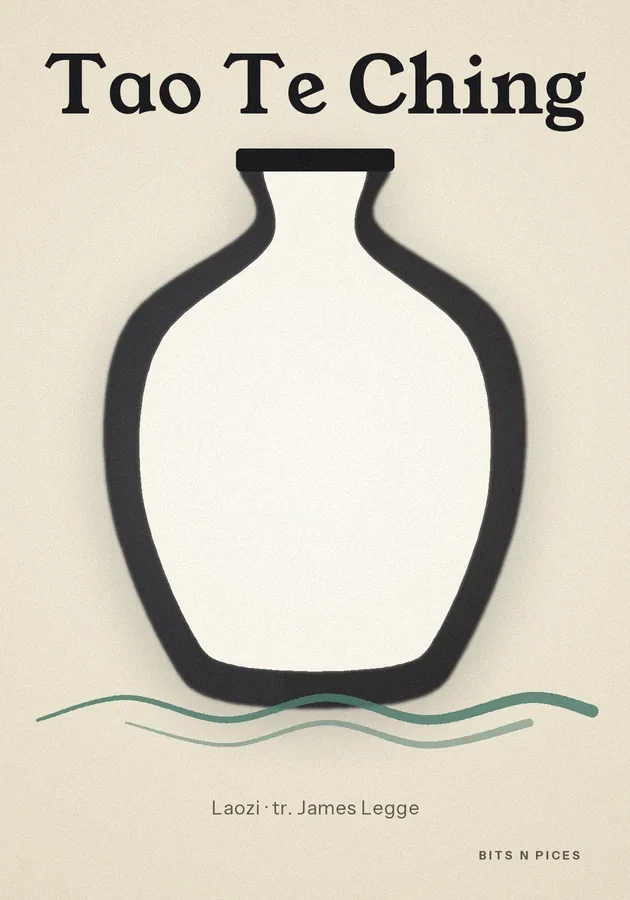
Tao Te Ching
Puntos clave
- Fluir sin forzar suele lograr más que luchar contra la corriente
- La suavidad y la paciencia vencen a la rigidez, como el agua a la roca
- El espacio vacío, en una vasija o una agenda, crea la utilidad
- Saber cuándo tienes suficiente ya es una forma duradera de riqueza
- El mejor líder se vuelve prescindible y deja el mérito a los demás
Dentro de este bit
- El camino que no puede nombrarse
The Tao Te Ching is a short Chinese text of 81 verses attributed to Laozi, an ancient sage about whom almost nothing is known for certain. James Legge's 1891 translation brought it to English readers, and it has stayed in print because its ideas keep proving useful.
- La acción sin esfuerzo rinde más
The best known idea in the text is wu wei, often translated as non-action, though it really means acting without forcing. A farmer cannot make rice grow faster by pulling on the shoots; the work is to prepare the soil, plant at the right time, and let growth happen.
- El agua vence al ceder
Laozi's favourite image is water. It is the softest thing there is, yet it wears away stone, fills any container, and always flows to the lowest place, which is exactly why it ends up with everything.
- El vacío hace útil a las cosas
One of the most striking verses points out that a pot is useful because of the empty space inside it, a wheel turns because of the hole at its hub, and a room is livable because of the space between its walls. We normally value what is present and ignore what is absent, but Laozi shows that the absence is where the use lives.
- El líder que nadie nota
A surprising amount of the Tao Te Ching is about ruling, and its advice runs against instinct. The worst leader is feared, the next is despised, a better one is loved and praised, but the best is barely noticed, and when the work is done the people say they did it themselves.
- Ponlo en práctica
Pick one situation this week where you have been forcing an outcome, whether a conversation, a project, or a habit, and deliberately step back for 3 days to see what happens on its own. In one disagreement, yield on the small point and notice how much easier the larger point becomes.
Aprende de seis maneras
Visualizar, Mapa Mental, Práctica, Escenario, Desafío y Repaso están escritos para este libro.
Narrado
Escucha este bit, leído por Michael o Bella.
Cuestionario y flashcards
Pon a prueba lo que lees y reténlo con repetición espaciada.
Bits AI
Responde sobre el libro, la sección o la pregunta del cuestionario en la que te encuentras.





