

The Essential Guide to Debt Management
Puntos clave
- Debt repayment runs on monthly surplus, so the first number to know is what is left after essentials, not what you owe.
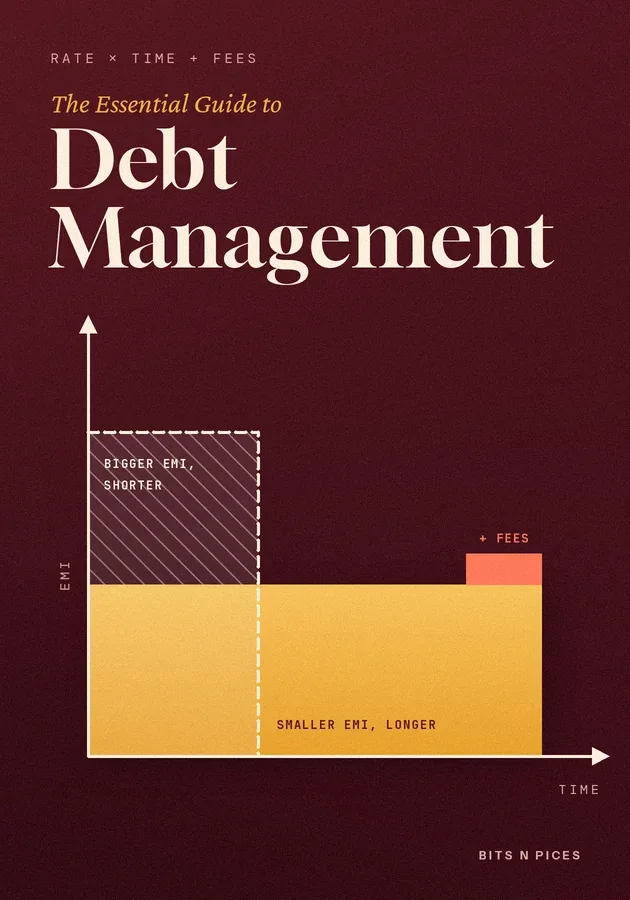
- The true price of a debt is its annual rate multiplied by the time you take, plus fees, so a smaller EMI over longer often costs more.
- Protect debts with serious consequences first, such as housing, secured loans and utilities, then let interest rates decide where extra money goes.
- A small starter buffer comes before aggressive repayment, because an emergency with no cushion becomes new debt at the worst possible rate.
- Your credit record rewards on-time payments and low balances over time, so ignore score tricks and promises of instant freedom from debt.
Dentro de este bit
- Cash flow powers every repayment plan
Every debt strategy, however clever, runs on one fuel: the money left each month after essentials and minimum payments. Call it surplus.
- The real price of borrowing
The monthly payment is the number lenders advertise and the least useful one for comparing loans. The true price of a debt depends on three things: the annual rate, the time you take to repay and the fees.
- Priority debts and the order of protection
Not all debts carry the same consequences when they go unpaid. Priority debts are those where falling behind could cost you your home, your essential services or an asset you depend on: rent or a home loan, a loan secured on the vehicle you need for work, a gold loan, electricity and water, and taxes.
- Buffers, savings and the repay-or-invest question
Paying debt as fast as possible sounds right, but with no savings at all the first surprise, a repair, a medical bill, a gap in work, goes straight back onto a card. That is why most plans put a small starter buffer before aggressive repayment.
- Strategies and their trade-offs
Once surplus exists, priorities are protected and a buffer is in place, the question is how to steer the surplus. The avalanche sends it to the highest rate first and minimises interest.
- Your credit record and what to ignore
Your credit record is the long-term result of everything else here. Scoring models differ by country, but the pattern is similar: a steady history of on-time payments matters most, followed by how much of your available credit you are using.
Aprende de seis maneras
Visualizar, Mapa Mental, Práctica, Escenario, Desafío y Repaso están escritos para este libro.
Cuestionario y flashcards
Pon a prueba lo que lees y reténlo con repetición espaciada.
Bits AI
Responde sobre el libro, la sección o la pregunta del cuestionario en la que te encuentras.





