

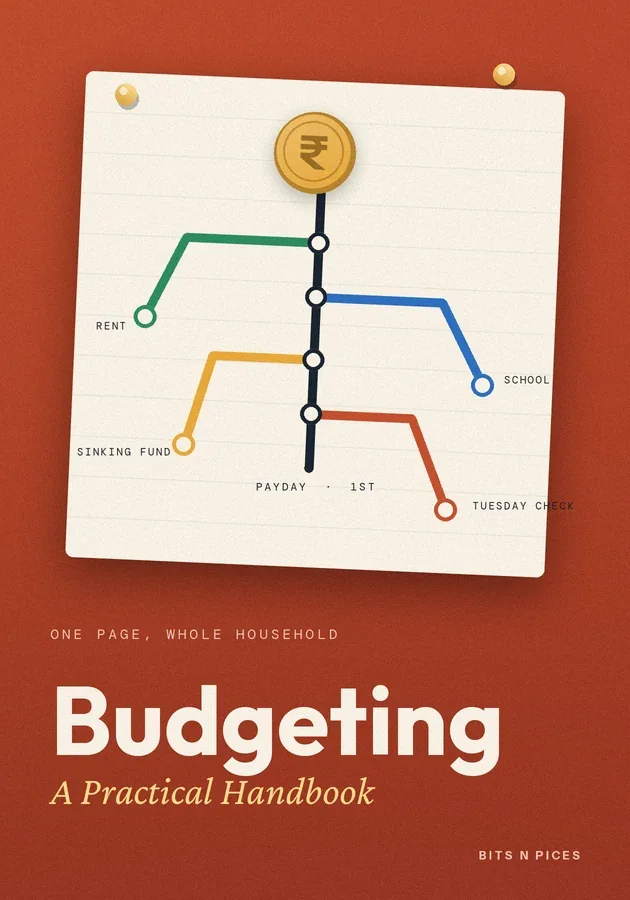
Budgeting: A Practical Handbook
Points clés
- Map every account, income date and bill on one page, so both parents can see what leaves when and who is responsible for it.
- Turn each yearly family cost into a monthly transfer by writing it on a twelve-month calendar and dividing the total by twelve.
- A fifteen-minute weekly check of balances against the next seven days of bills catches problems while there is still time to act.
- Give children a real amount to manage, sized to their age, and let small mistakes happen while the stakes are pocket-money sized.
- When the plan breaks, follow a written reset: protect essentials, pause optional funds, talk to lenders early and explain calmly at home.
À l'intérieur de ce bit
- Setting up the household money map
Every family system starts with a single page that shows where money comes from and where it goes. Block out one afternoon.
- The annual cost calendar and its sinking funds
Most family budgets are broken not by monthly bills but by costs that arrive once a year. The fix is a twelve-month calendar.
- The fifteen-minute Tuesday money check
A monthly budget needs a weekly heartbeat, or problems surface too late to fix. Choose one fixed fifteen-minute slot.
- Running a monthly family money meeting
Once a month, stretch the Tuesday check into a meeting of about thirty minutes, with the same agenda each time so it feels routine rather than alarming. The adults take the first twenty minutes: last month's plan against actual spending, the biggest miss, next month's calendar costs, and any decision on savings or debt.
- Pocket money that teaches planning
Pocket money is the safest place for children to learn budgeting, because a mistake costs a few coins rather than a month's rent. A workable system grows with age.
- The reset checklist for when plans break
Every family plan breaks eventually: overtime disappears, a relative needs help, a large bill arrives. Write your reset checklist now, while things are calm, so that on a hard day you follow steps instead of panicking.
Apprenez-le de six manières
Visualisation, Carte mentale, Pratique, Scénario, Défi et Révision sont disponibles pour ce livre.
Quiz et cartes mémoire
Testez ce que vous avez lu et retenez-le grâce à la répétition espacée.
Bits AI
Il répond sur le livre, la section ou la question de quiz sur laquelle vous vous trouvez.





