

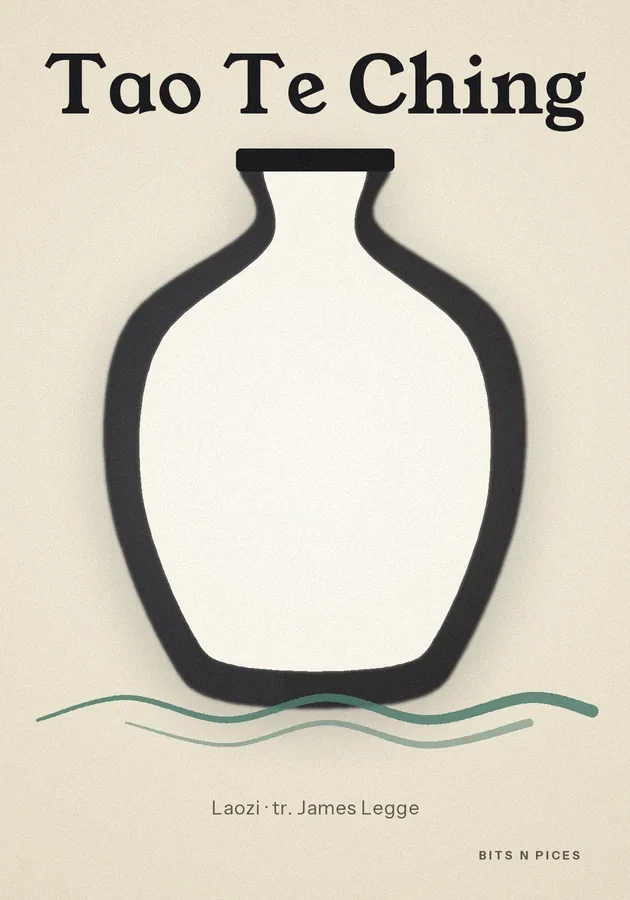
Tao Te Ching
Points clés
- Agir sans forcer est souvent plus efficace que lutter
- La douceur et la patience l'emportent sur la rigidité
- L'utilité réside dans le vide, d'un pot ou d'un calendrier
- Savoir se contenter de ce qu'on a est une vraie richesse
- Les meilleurs leaders s'effacent et laissent le mérite aux autres
À l'intérieur de ce bit
- La voie qu'on ne peut nommer
The Tao Te Ching is a short Chinese text of 81 verses attributed to Laozi, an ancient sage about whom almost nothing is known for certain. James Legge's 1891 translation brought it to English readers, and it has stayed in print because its ideas keep proving useful.
- Agir sans effort accomplit davantage
The best known idea in the text is wu wei, often translated as non-action, though it really means acting without forcing. A farmer cannot make rice grow faster by pulling on the shoots; the work is to prepare the soil, plant at the right time, and let growth happen.
- L'eau l'emporte en cédant
Laozi's favourite image is water. It is the softest thing there is, yet it wears away stone, fills any container, and always flows to the lowest place, which is exactly why it ends up with everything.
- Le vide rend les choses utiles
One of the most striking verses points out that a pot is useful because of the empty space inside it, a wheel turns because of the hole at its hub, and a room is livable because of the space between its walls. We normally value what is present and ignore what is absent, but Laozi shows that the absence is where the use lives.
- Le leader que personne ne remarque
A surprising amount of the Tao Te Ching is about ruling, and its advice runs against instinct. The worst leader is feared, the next is despised, a better one is loved and praised, but the best is barely noticed, and when the work is done the people say they did it themselves.
- Passez à l'action
Pick one situation this week where you have been forcing an outcome, whether a conversation, a project, or a habit, and deliberately step back for 3 days to see what happens on its own. In one disagreement, yield on the small point and notice how much easier the larger point becomes.
Apprenez-le de six manières
Visualisation, Carte mentale, Pratique, Scénario, Défi et Révision sont disponibles pour ce livre.
Version audio
Écoutez ce bit, lu par Michael ou Bella.
Quiz et cartes mémoire
Testez ce que vous avez lu et retenez-le grâce à la répétition espacée.
Bits AI
Il répond sur le livre, la section ou la question de quiz sur laquelle vous vous trouvez.





