

Tiny Habits
Points clés
- Un comportement naît de la rencontre d'une motivation, d'une capacité et d'un déclencheur
- Créez une habitude si petite qu'elle reste faisable même les pires jours
- Ancrez une nouvelle habitude juste après un geste déjà quotidien
- Célébrez sur-le-champ : c'est l'émotion qui ancre l'habitude
- Aménagez votre environnement au lieu de compter sur votre volonté
À l'intérieur de ce bit
- Changer est plus facile quand c'est minuscule
BJ Fogg, a Stanford behaviour scientist, once decided to do 2 push-ups every time he went to the bathroom. It sounds silly, but within months he was doing dozens a day without effort.
- L'équation du comportement
Fogg's central model says a behaviour happens when 3 things line up at the same moment: motivation, ability and a prompt. He writes it as B equals MAP.
- Rétrécissez jusqu'à ce que ce soit simple
Fogg suggests two ways to make any behaviour tiny. Either take a starter step, like putting on your running shoes rather than running, or scale down the whole thing, like flossing 1 tooth instead of all of them.
- Ancrez l'habitude à votre routine
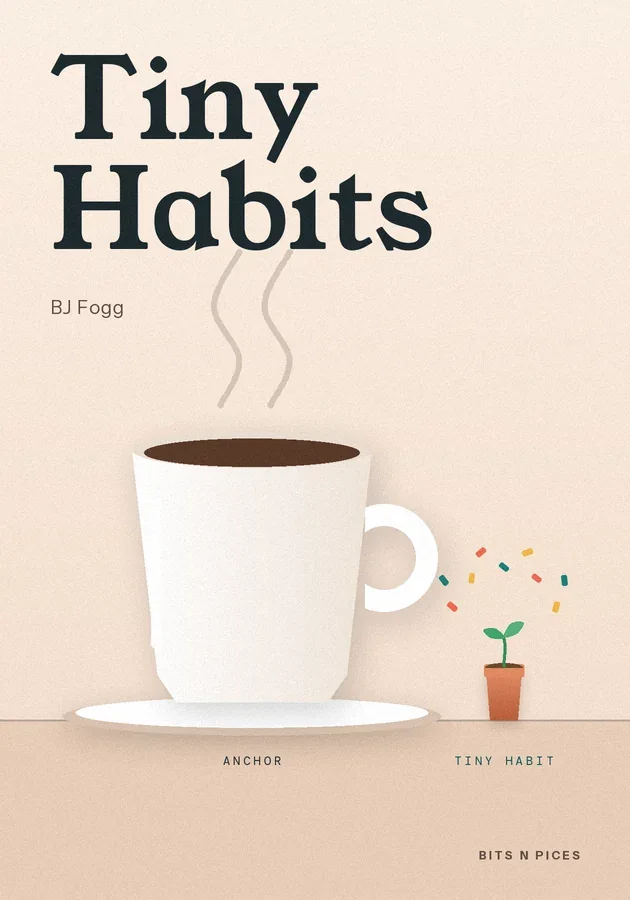
A new habit needs a reliable prompt, and Fogg says the best prompt is a behaviour already in your life. He calls this an anchor.
- Célébrez pour ancrer
This is the part most habit advice misses. Fogg argues that habits form through emotion, not repetition alone.
- Passez à l'action
This week, choose one habit you want and shrink it until it takes under 30 seconds, like 1 push-up or writing 1 sentence. Find an anchor by listing 5 things you already do every day and picking the one that happens in the right place and at the right time.
Apprenez-le de six manières
Visualisation, Carte mentale, Pratique, Scénario, Défi et Révision sont disponibles pour ce livre.
Version audio
Écoutez ce bit, lu par Michael ou Bella.
Quiz et cartes mémoire
Testez ce que vous avez lu et retenez-le grâce à la répétition espacée.
Bits AI
Il répond sur le livre, la section ou la question de quiz sur laquelle vous vous trouvez.





