

Poin penting
- There is no neutral way to present a choice, so design it on purpose
- A nudge changes behaviour without banning options or changing prices much
- Defaults win because most people stick with whatever requires no action
- Telling people what others do is one of the strongest nudges available
- Good choice architecture expects mistakes and gives quick, clear feedback
Di dalam bit ini
- The cafeteria that decides for you
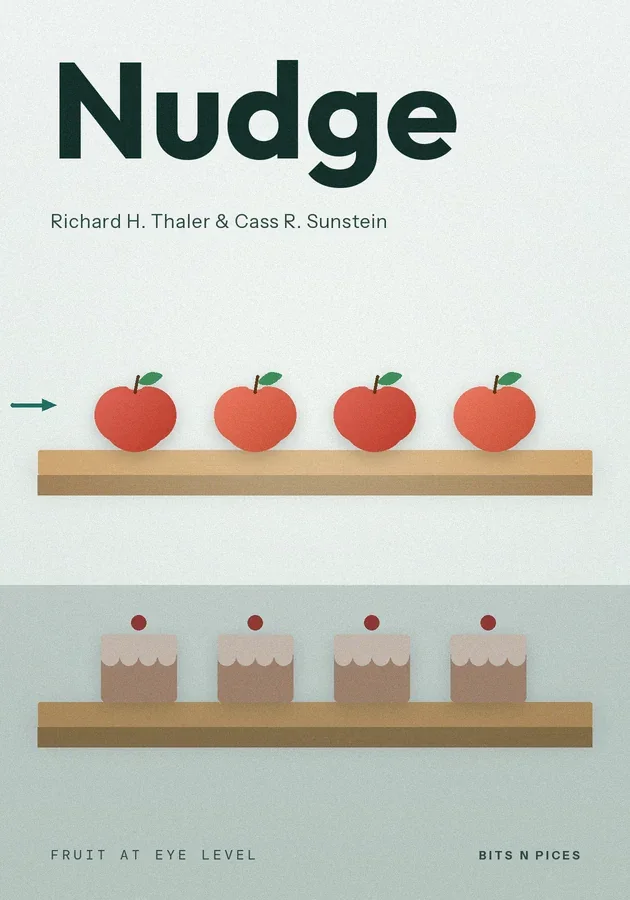
Imagine you run a school canteen. You can put the fruit at eye level and the fried snacks at the back, or the other way round.
- Humans are not Econs
Economics textbooks describe a creature the authors nickname an Econ, who calculates perfectly, never forgets, and has iron self-control. Real Humans are different.
- The quiet power of the default
The single most effective nudge is the default: what happens if you do nothing. In countries where people are organ donors unless they opt out, consent rates are dramatically higher than where they must opt in, even though the populations feel the same about donation.
- Designing for people who err
Good choice architecture assumes mistakes and builds around them. The authors point to petrol caps tethered to the car and ATMs that return your card before the cash, so you cannot drive off without them.
- Everyone else is doing it
We take cues from other people more than we admit. Thaler and Sunstein describe experiments where individuals gave obviously wrong answers to simple questions just because the group did.
- Put it to work
This week, look for one choice you keep making badly and change the default around it: set up an automatic transfer to savings on salary day, keep fruit on the counter and snacks in a high cupboard, or make your phone open to a book app instead of social media. Find one form, menu or process you control at work and reorder its options so the sensible choice is first and easiest.
Pelajari dengan enam cara
Visualisasi, Peta Konsep, Latihan, Skenario, Tantangan, dan Ulasan tersedia untuk buku ini.
Dinarasikan
Dengarkan bit ini, dibacakan oleh Michael atau Bella.
Kuis dan flashcard
Uji apa yang kamu baca dan ingat terus dengan pengulangan berjarak.
Bits AI
Menjawab tentang buku, bagian, hingga pertanyaan kuis yang sedang kamu kerjakan.





