

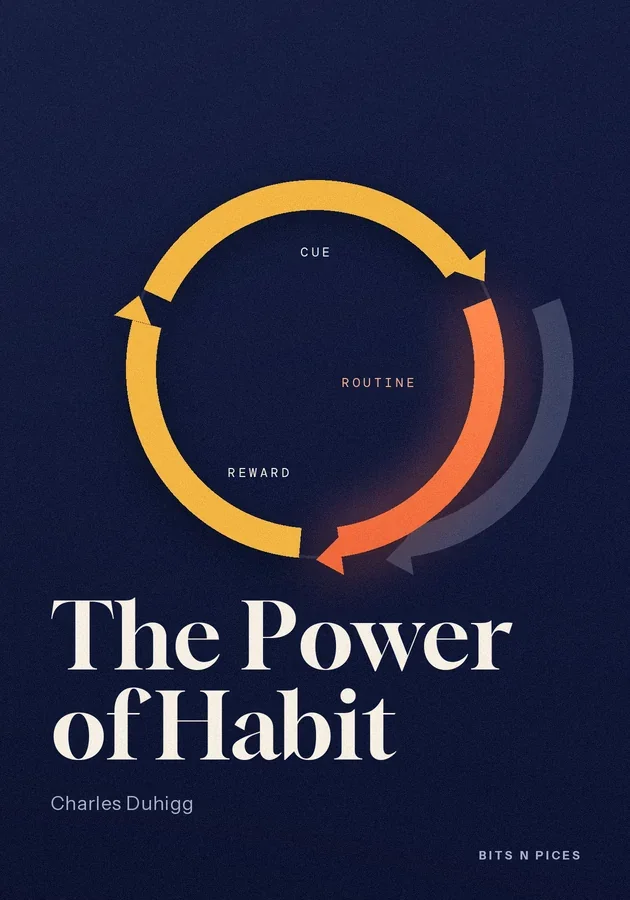
The Power of Habit
Poin penting
- Every habit runs on a loop of cue, routine and reward that the brain automates
- Craving for the reward is what makes a habit stick or fall apart
- Keep the cue and reward but swap the routine to change a habit
- Keystone habits like exercise or family dinners start chain reactions across your life
- Willpower works like a muscle: it tires, it strengthens and planning saves it
Di dalam bit ini
- Your brain runs on loops
Think about the last time you drove or walked a familiar route and arrived with no memory of the journey. Your brain had handed the job over to a habit.
- Cue, routine, reward and craving
Every habit, Duhigg argues, has three parts. A cue triggers it: a time, a place, a feeling, a person or a previous action.
- Swap the routine, keep the rest
You cannot easily delete a habit, but you can rewrite it. Duhigg calls this the golden rule of habit change: keep the old cue and the old reward, and insert a new routine between them.
- Keystone habits and willpower
Some habits matter far more than others because they set off chain reactions. Duhigg calls these keystone habits.
- Habits of companies and crowds
Organisations have habits too, and they are mostly unwritten. Duhigg describes a hospital where nurses had a habit of not questioning surgeons, until a series of avoidable mistakes forced a change, and a rail station fire that spread because no department felt responsible for the gap between them.
- Put it to work
Pick one habit you want to change and, for 3 days, write down the cue each time it fires: the time, place, mood, people and what you did just before. Then test rewards.
Pelajari dengan enam cara
Visualisasi, Peta Konsep, Latihan, Skenario, Tantangan, dan Ulasan tersedia untuk buku ini.
Dinarasikan
Dengarkan bit ini, dibacakan oleh Michael atau Bella.
Kuis dan flashcard
Uji apa yang kamu baca dan ingat terus dengan pengulangan berjarak.
Bits AI
Menjawab tentang buku, bagian, hingga pertanyaan kuis yang sedang kamu kerjakan.





