

Information Evaluation: From Beginner to Confident
Punti chiave
- Before you believe or share a message, pause and rewrite it as one checkable sentence, because a feeling cannot be checked but a claim can.
- Trace every claim to whoever said it first and note where and when, since screenshots and forwards strip away the place, the date and the context.
- Leave an unfamiliar page to learn who runs it and what it gains, before you spend any time judging what it says.
- Finish every check with a verdict sentence: what you think, because of which evidence, and what would make you change your mind.
- Practise three low-stakes checks a week and log each result, because confidence should rest on evidence that you have actually improved.
All'interno di questo bit
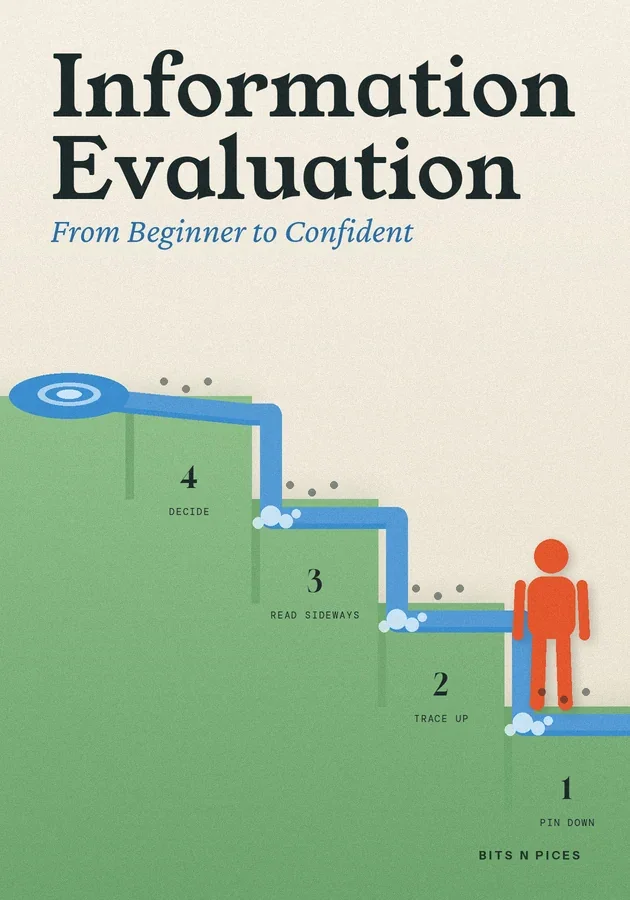
- Four rungs from believing to judging
Most people start in the same place: absorbing. A message arrives, it feels right or it feels alarming, and it gets believed or forwarded within seconds.
- Rung one: pause and pin down the claim
The first rung is a pause long enough to notice two things: how the message makes you feel, and what it actually says. Strong feelings such as anger, fear or delight are not proof of anything, but they are a signal to slow down, because misleading messages are often written to trigger exactly those feelings.
- Rung two: trace it upstream to the source
A source is wherever a piece of information comes from. The primary source is the original: the official notice itself, the full report, the person who was actually there.
- Rung three: read sideways before reading deeper
When you meet an unfamiliar website or account, the natural move is to read it carefully from top to bottom. The better move is to leave it.
- Rung four: decide, and name what would change it
The top rung turns checking into a decision you can explain. By now you have the claim, its source and what others say about it.
- Practising on purpose and proving you climbed
Rungs are climbed by practice, not by reading about them. Deliberate practice means working on one specific skill at a time, at a level slightly beyond comfortable, and checking your answers.
Impara in sei modi
Visualizza, Mappa Mentale, Pratica, Scenario, Sfida e Ripasso sono stati scritti per questo libro.
Quiz e flashcard
Metti alla prova ciò che hai letto e memorizzalo con la ripetizione spaziata.
Bits AI
Risponde riguardo al libro, alla sezione o alla domanda del quiz su cui ti trovi.





