重要なポイント
- 交渉とは妥協点を探ることではなく、感情と傾聴のプロセスである
- 相手の最後の数言を繰り返すと、相手は話し続け、本音が見えてくる
- 相手の感情をあえて言葉にすると、警戒が解けて信頼が生まれる
- 中身のない「Yes」ではなく、「おっしゃる通りです」を引き出す
- 「どうやって」「何を」で始まる問いを投げ、相手に解決策を考えさせる
このbitの内容
- 交渉は論理ではなく傾聴である
Imagine a bank robbery with hostages inside, and a negotiator on the phone whose only tools are his voice and his ears. That was the job of Chris Voss, a former FBI hostage negotiator, and this book turns what he learned in those situations into a method for everyday bargaining.
- ミラーリングとラベリングで心を開く
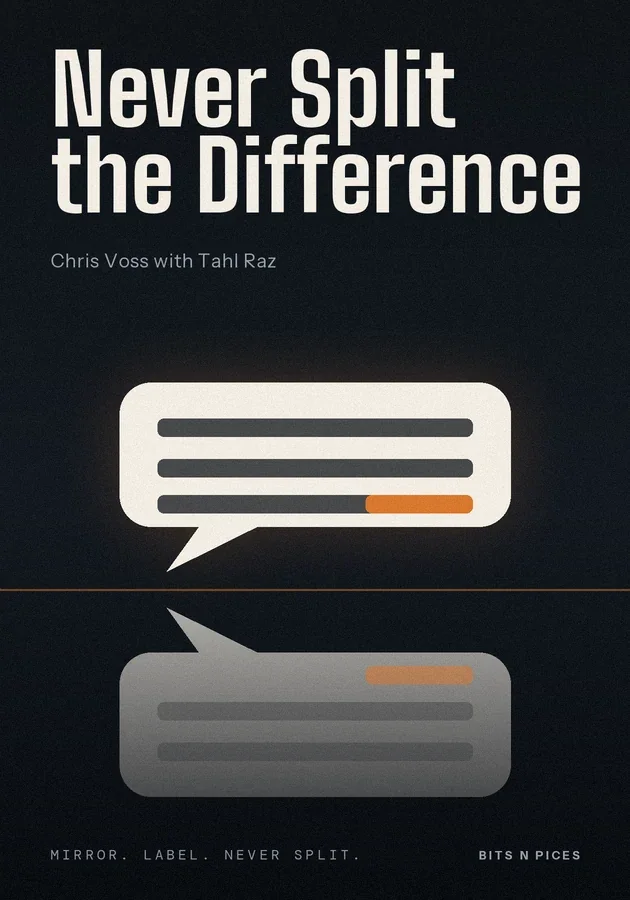
Two of the simplest tools in the book are mirroring and labelling. Mirroring means repeating the last 1 to 3 words the other person said, with a slight upward tone, and then staying quiet.
- 「Yes」ではなく「おっしゃる通り」を狙う
Most people chase a yes, but Voss argues that yes is often worthless. There is the counterfeit yes people give to escape a pushy salesperson, and the confirmation yes that commits to nothing.
- 優れた質問が局面を動かす
When someone makes an unreasonable demand, the instinct is to argue or refuse. Voss offers a better move: ask a calibrated question, an open question beginning with how or what that pushes the other side to work on your problem.
- タフに交渉し、ブラックスワンを探す
When the conversation finally turns to numbers, Voss lays out a structured approach he calls the Ackerman model. Set your target, then open with an anchor far from it, and move in progressively smaller steps so each concession feels like you are running out of room.
- 実践に移す
This week, practise mirroring in a low-stakes chat: repeat the last few words a colleague says, stay silent, and notice how much more they tell you. In your next disagreement, label the other person's emotion before you make your point, and watch the temperature drop.
6つの方法で学ぶ
この本のために、Visualize、Mind Map、Practice、Scenario、Challenge、Reviewが用意されています。
音声読み上げ
MichaelまたはBellaによるこのbitの朗読を聴きましょう。
クイズとフラッシュカード
読んだ内容をテストし、間隔反復で記憶に定着させましょう。
Bits AI
あなたが読んでいる本、セクション、クイズの質問について答えます。