

핵심 요약
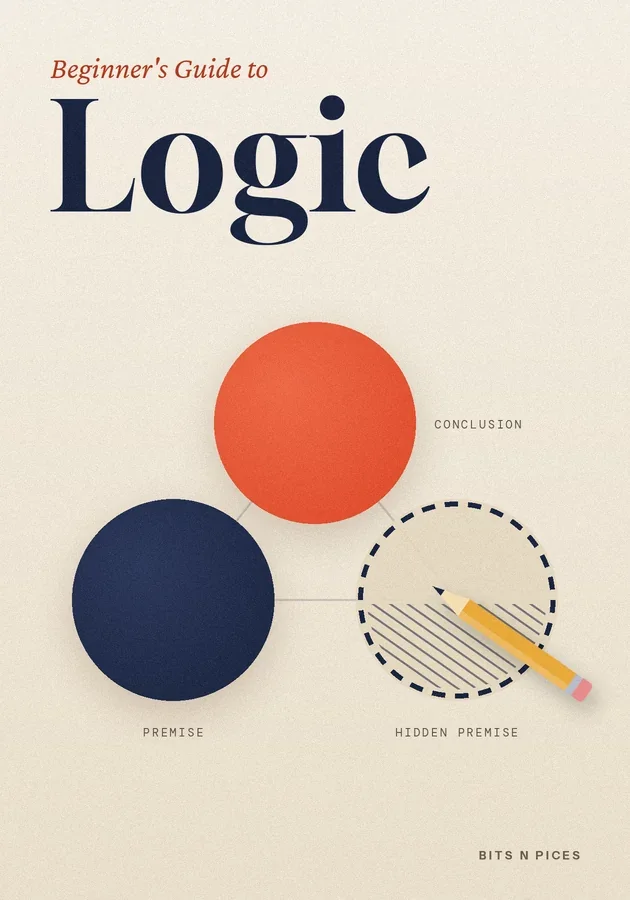
- Before judging any argument, find its conclusion, write down the premise it quietly depends on, and try to imagine the premises true and the conclusion false.
- Validity is about form and truth is about facts, so check both: a valid argument built on one false premise can still mislead you.
- An if-then claim runs one way: its contrapositive says the same thing, but its converse and inverse are new claims that need their own evidence.
- One clear exception is enough to sink an 'all' claim, and 'not all passed' means at least one failed, not that everyone did.
- Test arguments you agree with as hard as ones you dislike, because liking a conclusion is a common reason people wave a bad argument through.
이 비트의 내용
- What logic studies and what it cannot
Logic is the study of when a conclusion follows from the reasons given for it. It does not ask whether each reason is true; that is a job for evidence, measurement and experience.
- The working vocabulary of arguments
An argument is a set of statements in which some, the premises, are offered as reasons for another, the conclusion. The step from one to the other is the inference.
- Your first three moves with any argument
Every argument you meet, from a sales pitch to a family debate, yields to the same three moves. First, find the conclusion by asking what you are being asked to accept; it is often buried in the middle or left unsaid.
- Conditionals, where careful people still slip
An if-then statement links a condition to a consequence, and it runs in one direction only. If a parcel is marked express, it carries a red sticker, means express is enough to guarantee red; red is required on every express parcel but may appear on others too.
- All, some, none: the small words that decide
Quantifiers, the words all, some and none, carry more weight than their size suggests. To show that 'all the invoices were paid' is false, you need only one unpaid invoice; you do not need to show that none were paid.
- Beginner mistakes and a self-check routine
Three mistakes catch almost every beginner, and they get subtler as you improve. The first is belief bias: judging an argument by whether you like its conclusion.
여섯 가지 방법으로 배우기
이 책을 위해 시각화, 마인드맵, 연습, 시나리오, 챌린지, 복습 기능이 준비되어 있어요.
퀴즈와 플래시카드
읽은 내용을 테스트하고 간격 반복으로 확실히 기억하세요.
Bits AI
보고 있는 책, 섹션, 퀴즈 질문에 대해 답변해 줍니다.





