

핵심 요약
- Write down every task your household runs on, including the invisible planning, then agree who owns each one rather than who helps.
- Spend twenty minutes each Sunday matching the week's heaviest days to your energy, and drop, move or share one thing on each.
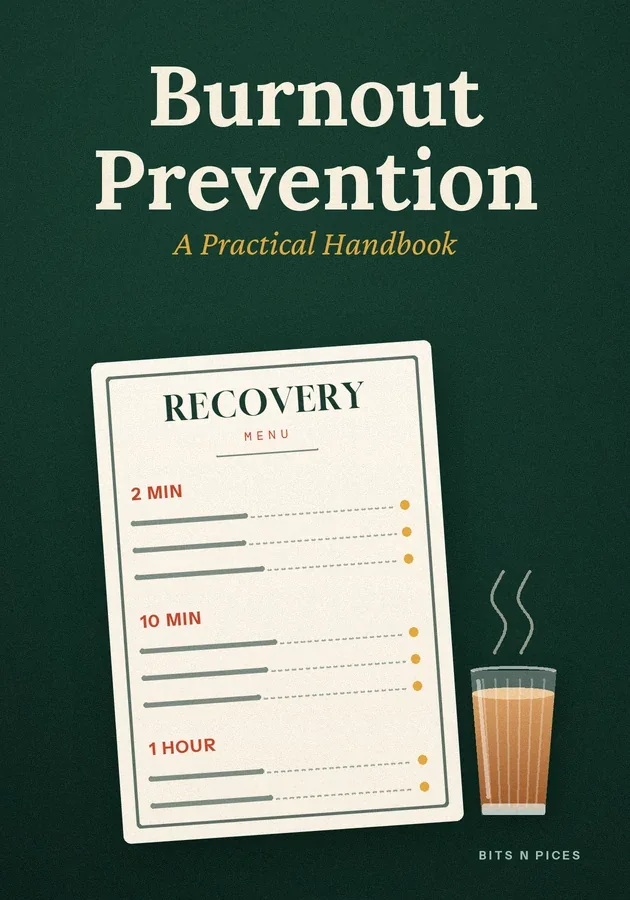
- Keep a written recovery menu of two-minute, ten-minute and one-hour options so that real rest is quick to choose when you are tired.
- Use short, prepared scripts to decline, delay, delegate and ask for help, because a tired brain struggles to find the words on the spot.
- Children learn rest by watching you, so name your tiredness calmly, show how you recover and keep adult worries off their shoulders.
이 비트의 내용
- Step one: the household load audit
Burnout in parents often starts with a load nobody has measured. Before changing anything, take ten minutes and a sheet of paper.
- The Sunday reset and the morning traffic light
Two short routines keep the load visible. The Sunday reset takes twenty minutes.
- Build a recovery menu before you need it
When you are exhausted, choosing how to rest is surprisingly hard, and the phone usually wins by default. A recovery menu solves this.
- Scripts for saying no and asking for help
Tired brains struggle to find the right words, so prepare them in advance. Four scripts cover most situations.
- Showing your children how to rest
Children learn more from what they see than from what they are told. If they only ever watch you rushing, they learn that grown-ups never stop.
- Your warning-sign checklist and family plan
Agree in advance what you will do when the signs appear, because decisions made in the middle of exhaustion are usually poor ones. Write a short checklist of your own early warnings.
여섯 가지 방법으로 배우기
이 책을 위해 시각화, 마인드맵, 연습, 시나리오, 챌린지, 복습 기능이 준비되어 있어요.
퀴즈와 플래시카드
읽은 내용을 테스트하고 간격 반복으로 확실히 기억하세요.
Bits AI
보고 있는 책, 섹션, 퀴즈 질문에 대해 답변해 줍니다.





