

핵심 요약
- Thirty days is long enough to move a career forward if each week has one theme and each day has one action under thirty minutes.
- Week one is about knowing what you are offering before you tell anyone; a target role and a skills inventory come before any application.
- Week two builds the toolkit once so it serves you for months: a base CV, a profile headline and a tracker for every contact and application.
- Week three puts the plan in your mouth, with networking messages sent, mock interviews recorded and one informational conversation held.
- Progress is measured in counts you control, such as conversations held and applications sent, and a slipped week is restarted, never abandoned.
이 비트의 내용
- How the thirty days are built
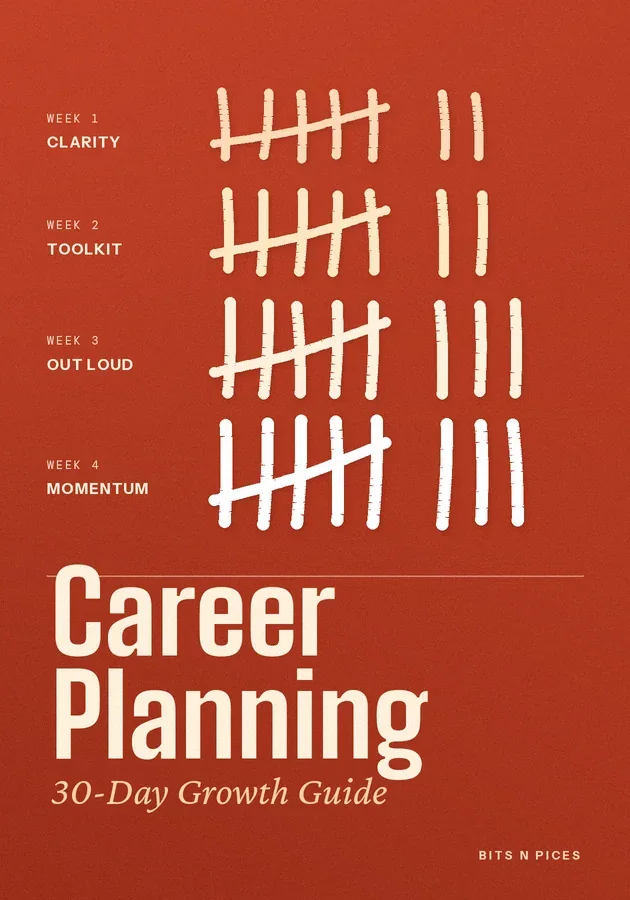
The programme has four weekly themes: clarity, toolkit, practice and momentum. Each day carries one micro-action that takes between ten and thirty minutes, and Sunday is a review day where you count what you did and set the next week.
- Week one: clarity before contact
The first week answers one question: what are you offering and to whom? Day one is a career timeline, listing every role, project and side responsibility on a single page.
- Week two: the toolkit you build once
Week two builds four tools and then leaves them alone. Days eight and nine produce a base CV of two pages, organised around results rather than duties, with each bullet holding an action and an outcome.
- Week three: practise out loud
Week three moves the plan from paper to speech. Day fifteen sends three short messages to people who do the target job or hire for it, asking for fifteen minutes to learn how they got there, not for a job.
- Week four: momentum and the ninety-day horizon
The final week turns preparation into visible activity. Days twenty-two and twenty-three tailor the base CV and cover note for two real postings using the words from week one, and submit them.
- Measuring progress and what to do when a week slips
Progress in a job search is measured by inputs you control, not outcomes you do not. The four counts that matter are conversations held, applications tailored and sent, hours of practice out loud, and follow-ups completed.
여섯 가지 방법으로 배우기
이 책을 위해 시각화, 마인드맵, 연습, 시나리오, 챌린지, 복습 기능이 준비되어 있어요.
퀴즈와 플래시카드
읽은 내용을 테스트하고 간격 반복으로 확실히 기억하세요.
Bits AI
보고 있는 책, 섹션, 퀴즈 질문에 대해 답변해 줍니다.





