

핵심 요약
- When a conversation matters, put your phone out of sight, and if you must stay reachable, say why at the very start.
- Match the channel to the message: text for facts, a call or a face-to-face talk for anything emotional or tangled.
- In remote and hybrid work, small talk no longer happens by accident, so join calls early and ask one specific question.
- Raise money topics early and briefly, with an I-statement and an alternative, instead of a long justification or a silent no-show.
- When a doubtful claim lands in a group chat, ask the sender privately where it came from so they can correct it without losing face.
이 비트의 내용
- Conversation before and after the smartphone
A generation ago, most everyday conversations happened face to face or on a phone call. Today a large share of them run through a screen: text messages, voice notes, video calls and family group chats that never quite end.
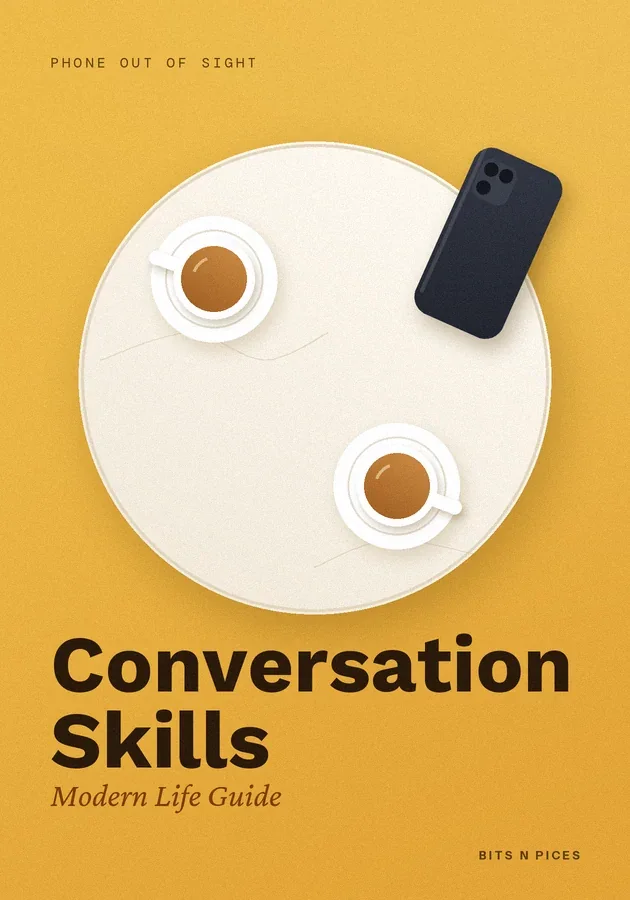
- The phone on the table
A phone is the easiest way to lose a conversation without realising it. Most people can tell within seconds when the person opposite drifts to a screen, and they shorten what they were about to say.
- Text, voice note, call or face to face
Every message travels through a channel, the route it takes to reach someone. Modern life offers more channels than ever, and choosing the wrong one causes more trouble than choosing the wrong words.
- Small talk on video calls and hybrid teams
Small talk is light, low-stakes conversation about the weather, the weekend or the commute. It sounds trivial, but it builds rapport, the feeling of being at ease with someone, and rapport is what makes people help each other when work gets hard.
- Awkward conversations about money
Rising costs mean more everyday conversations about money: splitting bills, saying no to an expensive outing, asking a friend to repay a loan. They feel awkward because money feels private, so many people stay silent and then quietly drop out, which friends usually read as rejection.
- Group chats, forwards and too much news
Information overload means everyone has read a headline, a rumour or a forward before a conversation even starts. Family and neighbourhood group chats are where this collides.
여섯 가지 방법으로 배우기
이 책을 위해 시각화, 마인드맵, 연습, 시나리오, 챌린지, 복습 기능이 준비되어 있어요.
퀴즈와 플래시카드
읽은 내용을 테스트하고 간격 반복으로 확실히 기억하세요.
Bits AI
보고 있는 책, 섹션, 퀴즈 질문에 대해 답변해 줍니다.





