

핵심 요약
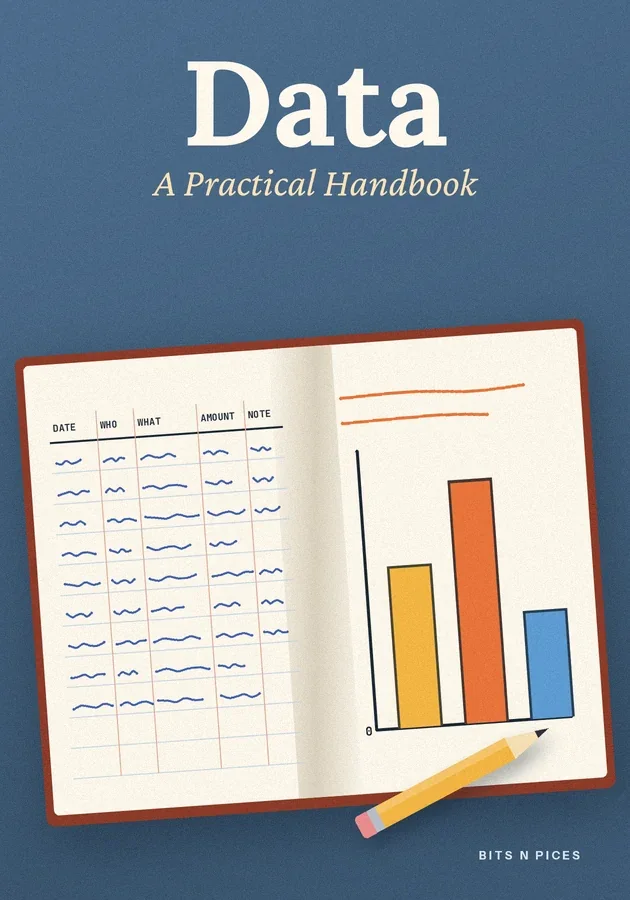
- Start a family data notebook with five columns, date, who, what, amount and note, and one sheet for each question you want answered.
- Write a one-line rule for every column, such as dates as year-month-day and minutes as plain numbers, so everyone records things alike.
- Spend ten minutes each Sunday sorting columns, removing duplicates, marking blanks as missing and fixing spellings, always on a copy of the raw sheet.
- Use bars to compare people and a line for change over time, start bars at zero, and let your child write a title stating the finding.
- Share family sheets with named people rather than anyone with the link, leave out details the question does not need, and keep asking who can see this.
이 비트의 내용
- Setting up a family data notebook
A family data notebook is one place where your household writes down the things it wants to understand: library books borrowed, chores done, rain collected in a jar, bus times to school. It can be a free spreadsheet app on a shared phone or a squared notebook stuck to the fridge.
- Rules that make everyone record alike
The moment two people write in the same sheet, they record things differently. One child types 15, another types 15 mins, a third writes quarter hour, and the column can no longer be added up.
- The Sunday ten-minute clean
Even careful families make entry mistakes, so set aside ten minutes a week to tidy the sheet. Work on a copy, or keep an untouched raw tab, so any slip can be undone.
- Answering a question on a Tuesday evening
With a clean sheet, most family questions take fifteen minutes and three tools that every spreadsheet has. Filter shows only the rows you care about, such as one child or one month.
- Making one honest chart with your child
A chart is where many children get hooked on data, so make it together. Follow four steps.
- Keeping family records private
Family data is often personal: names, ages, schools, routines, where you are and when. Treat it the way you treat house keys, and repeat a short routine every few months to keep it under control.
여섯 가지 방법으로 배우기
이 책을 위해 시각화, 마인드맵, 연습, 시나리오, 챌린지, 복습 기능이 준비되어 있어요.
퀴즈와 플래시카드
읽은 내용을 테스트하고 간격 반복으로 확실히 기억하세요.
Bits AI
보고 있는 책, 섹션, 퀴즈 질문에 대해 답변해 줍니다.





