

핵심 요약
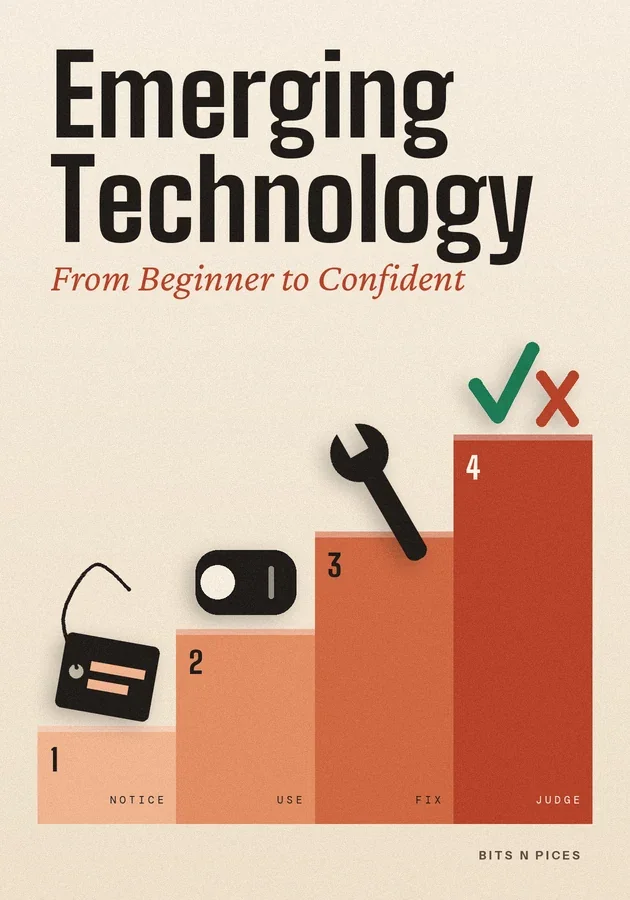
- Confidence with new technology grows in four rungs: noticing and naming, using with care, adjusting and fixing, and finally judging and choosing.
- At the first rung, spot the new technology in your day and learn its proper name, because vocabulary turns vague worry into questions.
- Before relying on a new tool, read its permissions and change one default, because careful use starts with knowing what it does unasked.
- When something breaks, follow a calm fixing order: restart, update, isolate the problem, then search the exact error message before asking for help.
- You have moved up a rung when you can explain a tool to someone else, fix a small fault yourself and reject a claim with a reason.
이 비트의 내용
- Four rungs and where you stand today
Nobody goes from nervous to confident with new technology in one leap. The path looks more like a ladder with four rungs.
- Rung one: noticing and naming
The first rung is awareness. New technology is often invisible until you look for it.
- Rung two: using a tool with care
At the second rung you move from noticing to using on purpose. The skill here is not speed; it is knowing what a tool does before you rely on it.
- Rung three: adjusting and fixing
The third rung is where confidence starts to feel real, because you can fix things. Most small faults respond to the same calm order.
- Rung four: judging and choosing
The top rung is judgement. Here you can look at a new technology, weigh its claims and decide whether it deserves a place in your life or work.
- Practising deliberately and proving progress
Climbing the ladder is not about reading more; it is about practising in small, deliberate repetitions. Deliberate practice means picking a task just beyond your current rung, doing it and noting what happened.
여섯 가지 방법으로 배우기
이 책을 위해 시각화, 마인드맵, 연습, 시나리오, 챌린지, 복습 기능이 준비되어 있어요.
퀴즈와 플래시카드
읽은 내용을 테스트하고 간격 반복으로 확실히 기억하세요.
Bits AI
보고 있는 책, 섹션, 퀴즈 질문에 대해 답변해 줍니다.





