

핵심 요약
- Before day one, list every topic with the marks it carries, sit a cold baseline paper, and multiply marks by weakness to decide where hours go.
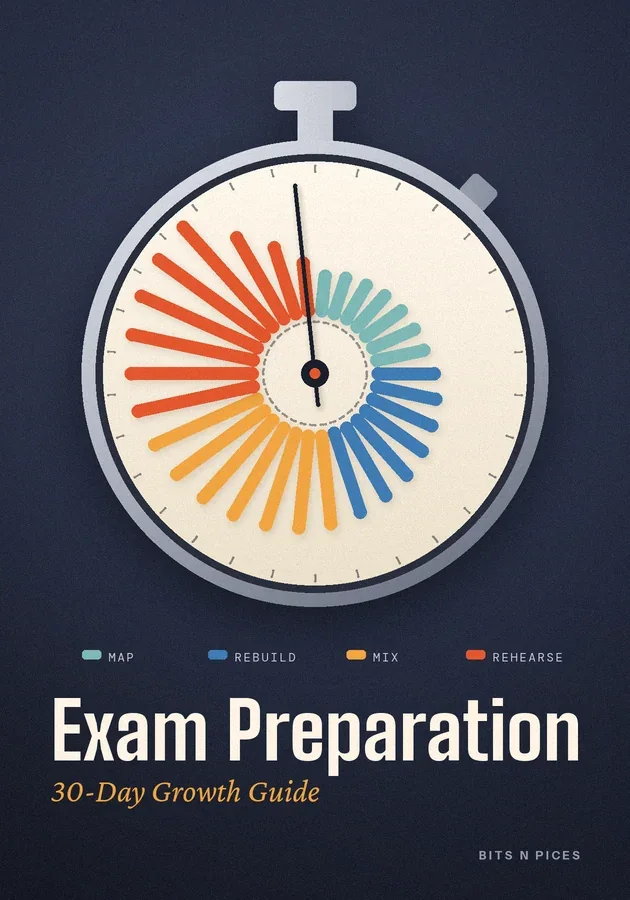
- Give each of the four weeks one theme: map and measure, rebuild weak topics, mix under the clock, then rehearse before a light taper.
- Run a daily micro-routine of recall warm-up, one focused block and three exit questions, and keep revisiting finished topics so they do not decay.
- Track blocks completed, recall hit rate and timed scores every week, and distrust numbers like hours or streaks that can rise without learning.
- When a week slips, drop, shrink and shift instead of doubling up, keep a fifteen-minute daily floor, and never miss it twice in a row.
이 비트의 내용
- Before day one: audit the target and yourself
A thirty-day programme usually fails before it starts, because it is built around a vague goal and an imagined schedule. Spend the day before day one on an audit.
- Week one: map, measure and fix a rhythm
The first week builds the machinery the rest of the month runs on. Turn your topic list into a tracker coloured red, amber or green, and update it as evidence arrives rather than as moods change.
- Week two: rebuild the weakest, heaviest topics
Week two spends most of its time on red topics with high priority scores, and each day follows the same micro-routine. Open with a five-minute recall warm-up on earlier topics.
- Week three: mixed sets under the clock
By week three most topics have been worked through, so the job changes from building knowledge to using it the way the exam demands. Replace single-topic practice with mixed sets, where you must first decide what kind of question you are facing.
- Week four: full rehearsals, then a taper
Week four front-loads the hardest work and ends light. Early in the week, sit one or two full papers at the same time of day as the real exam, with the same breaks and materials.
- When a week slips, and when numbers lie
Almost every thirty-day plan loses a week to illness, work, family or flat motivation, so the rescue rules matter more than the original plan. Never try to catch up by doubling the next week; doubled days usually slip again and eat into sleep.
여섯 가지 방법으로 배우기
이 책을 위해 시각화, 마인드맵, 연습, 시나리오, 챌린지, 복습 기능이 준비되어 있어요.
퀴즈와 플래시카드
읽은 내용을 테스트하고 간격 반복으로 확실히 기억하세요.
Bits AI
보고 있는 책, 섹션, 퀴즈 질문에 대해 답변해 줍니다.





