

핵심 요약
- Being rich means a life you define, not a number; decide what you love first
- Sort out credit cards and separate accounts so every rupee has a place to sit
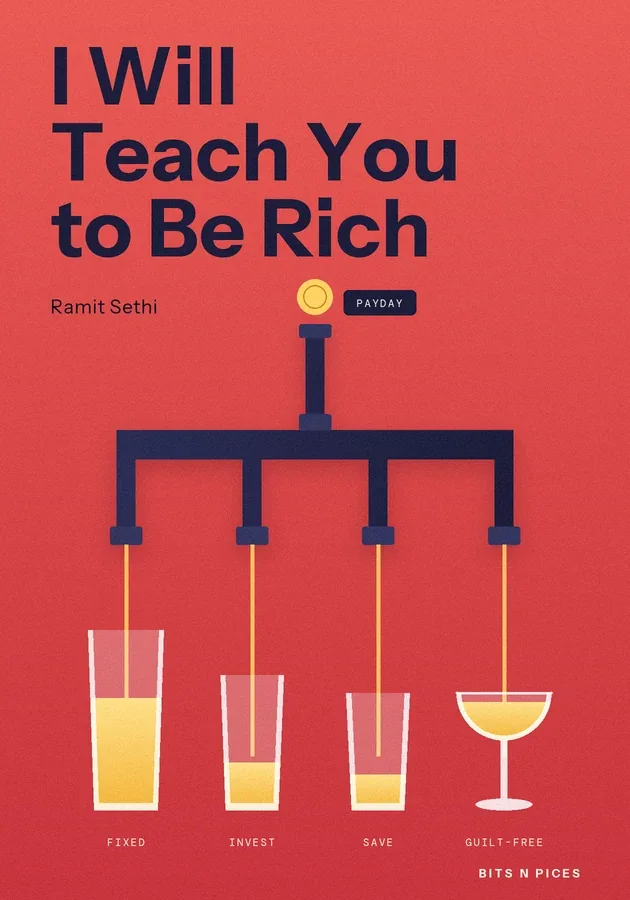
- Use a conscious spending plan: fixed costs, investing, savings and guilt-free spending
- Automate every transfer on payday so good habits no longer depend on willpower
- Invest in low-cost index funds and put your energy into salary negotiation and big purchases
이 비트의 내용
- Set it up once, then live
Most personal finance advice sounds like a diet: skip the coffee, feel guilty, quit in 3 weeks. Ramit Sethi throws that out.
- Fix the plumbing first
The first weeks are about accounts, not investing. Sethi has you sort out your credit cards, because a good credit score lowers the cost of every loan for decades and a bad one quietly taxes you.
- The conscious spending plan
Instead of a budget, which tracks every rupee after the fact, Sethi asks for a conscious spending plan decided in advance. Roughly half to 60% of take-home pay goes to fixed costs like rent, loans and groceries.
- Automate everything
Sethi's signature move is to make money move itself. On payday, automatic transfers send fixed amounts to investments, to savings goals, and to the credit card, leaving the remainder in the spending account.
- Invest boringly, win big elsewhere
On investing, Sethi is a committed skeptic of cleverness. Picking stocks and timing the market are hobbies that cost most people money, and the professionals who try mostly lose to a plain index over time.
- 직접 적용해 보기
This week, log in to your credit card and switch on autopay for the full balance, then call and ask for any annual fee to be waived. Open a separate savings account and give it a name that matches a real goal.
여섯 가지 방법으로 배우기
이 책을 위해 시각화, 마인드맵, 연습, 시나리오, 챌린지, 복습 기능이 준비되어 있어요.
내레이션 제공
Michael이나 Bella가 읽어주는 이 비트를 들어보세요.
퀴즈와 플래시카드
읽은 내용을 테스트하고 간격 반복으로 확실히 기억하세요.
Bits AI
보고 있는 책, 섹션, 퀴즈 질문에 대해 답변해 줍니다.





