핵심 요약
- 협상은 타협점을 찾는 게 아니라, 감정을 읽고 경청하는 일입니다.
- 상대방의 마지막 몇 마디를 따라 하세요. 더 많은 속마음을 털어놓게 됩니다.
- 상대의 감정에 이름을 붙여주세요. 긴장이 풀리고 신뢰가 쌓입니다.
- 영혼 없는 '네' 대신, 진심이 담긴 '맞는 말씀입니다'를 이끌어내세요.
- '어떻게'와 '무엇'으로 시작하는 질문을 던져 상대가 내 문제를 고민하게 만드세요.
이 비트의 내용
- 협상은 논리가 아닌 경청입니다
Imagine a bank robbery with hostages inside, and a negotiator on the phone whose only tools are his voice and his ears. That was the job of Chris Voss, a former FBI hostage negotiator, and this book turns what he learned in those situations into a method for everyday bargaining.
- 미러링과 라벨링으로 마음 열기
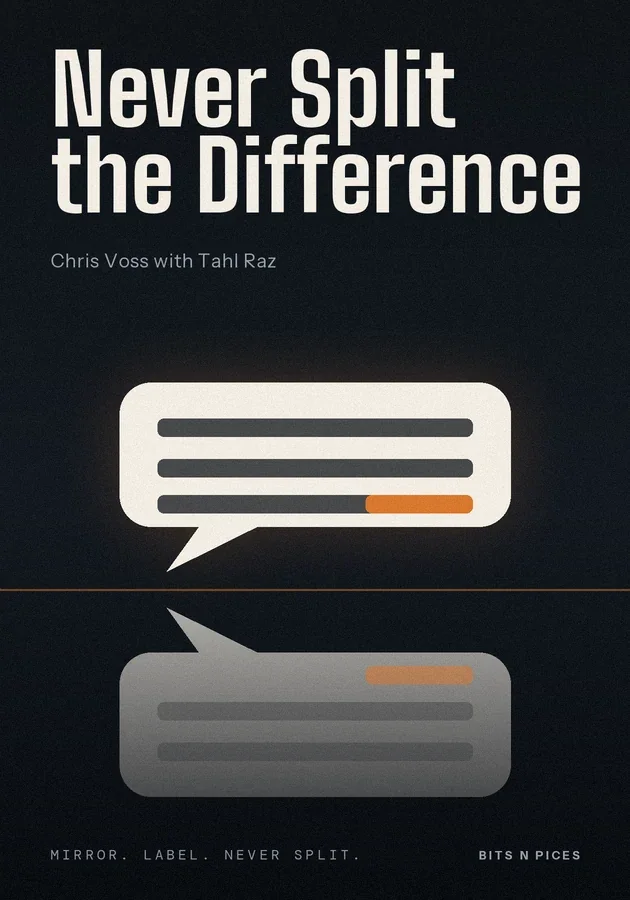
Two of the simplest tools in the book are mirroring and labelling. Mirroring means repeating the last 1 to 3 words the other person said, with a slight upward tone, and then staying quiet.
- '네' 대신 '맞습니다'를 이끌어내는 법
Most people chase a yes, but Voss argues that yes is often worthless. There is the counterfeit yes people give to escape a pushy salesperson, and the confirmation yes that commits to nothing.
- 해결책을 이끌어내는 정교한 질문
When someone makes an unreasonable demand, the instinct is to argue or refuse. Voss offers a better move: ask a calibrated question, an open question beginning with how or what that pushes the other side to work on your problem.
- 단호하게 협상하고, 숨은 변수를 찾아라
When the conversation finally turns to numbers, Voss lays out a structured approach he calls the Ackerman model. Set your target, then open with an anchor far from it, and move in progressively smaller steps so each concession feels like you are running out of room.
- 직접 적용해 보기
This week, practise mirroring in a low-stakes chat: repeat the last few words a colleague says, stay silent, and notice how much more they tell you. In your next disagreement, label the other person's emotion before you make your point, and watch the temperature drop.
여섯 가지 방법으로 배우기
이 책을 위해 시각화, 마인드맵, 연습, 시나리오, 챌린지, 복습 기능이 준비되어 있어요.
내레이션 제공
Michael이나 Bella가 읽어주는 이 비트를 들어보세요.
퀴즈와 플래시카드
읽은 내용을 테스트하고 간격 반복으로 확실히 기억하세요.
Bits AI
보고 있는 책, 섹션, 퀴즈 질문에 대해 답변해 줍니다.