

핵심 요약
- Spend the first week only naming problems, writing each one as a gap between what happens now and what you want instead.
- Before fixing anything, compare when the problem happens with when it could happen but does not; the difference usually points at the cause.
- Never choose from a single idea: list at least three options, including doing nothing, and score them on cost, speed and whether you can undo them.
- Test the smallest version of a solution for three to five days against a written prediction, then review what actually happened.
- Count three numbers every Friday, and when a week slips, do its core action at the weekend instead of restarting the month.
이 비트의 내용
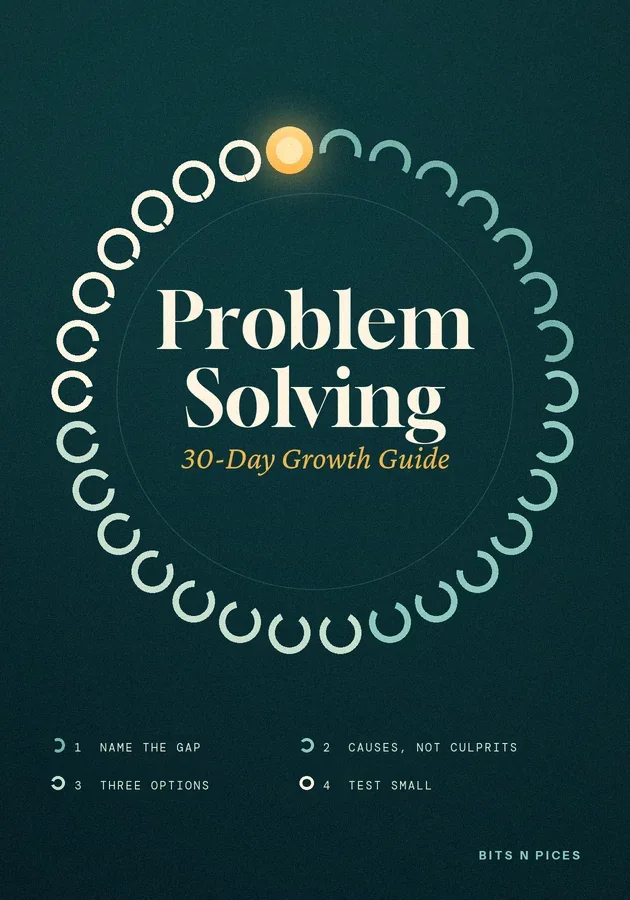
- How the thirty days are built
A problem is a gap between what is happening and what you want to happen. Problem solving is the skill of closing that gap on purpose rather than by luck.
- Week one: name the gap before fixing it
Most failed fixes start with a badly named problem. 'I am always late' is a complaint, not something you can work on.
- Week two: find causes, not culprits
Once a problem is named, the temptation is to blame someone. Blame feels like progress but rarely is, because the same problem usually returns with a new person in the frame.
- Week three: widen the options, then choose
Beginners often act on the first idea that arrives, which is rarely the best one. Week three sets a simple rule: no choice until at least three options are on paper.
- Week four: test small and review honestly
A solution is only a guess until it meets real life. Week four turns your chosen option into a test: the smallest version you can run for three to five days, with a check date written in your log before you start.
- Keeping score and rescuing a slipped week
Progress in problem solving is hard to feel, so count it. Every Friday, take three numbers from your log.
여섯 가지 방법으로 배우기
이 책을 위해 시각화, 마인드맵, 연습, 시나리오, 챌린지, 복습 기능이 준비되어 있어요.
퀴즈와 플래시카드
읽은 내용을 테스트하고 간격 반복으로 확실히 기억하세요.
Bits AI
보고 있는 책, 섹션, 퀴즈 질문에 대해 답변해 줍니다.





