

핵심 요약
- Most everyday problems give way to three plain questions: what exactly is going wrong, why might it be happening, and what small thing can we try?
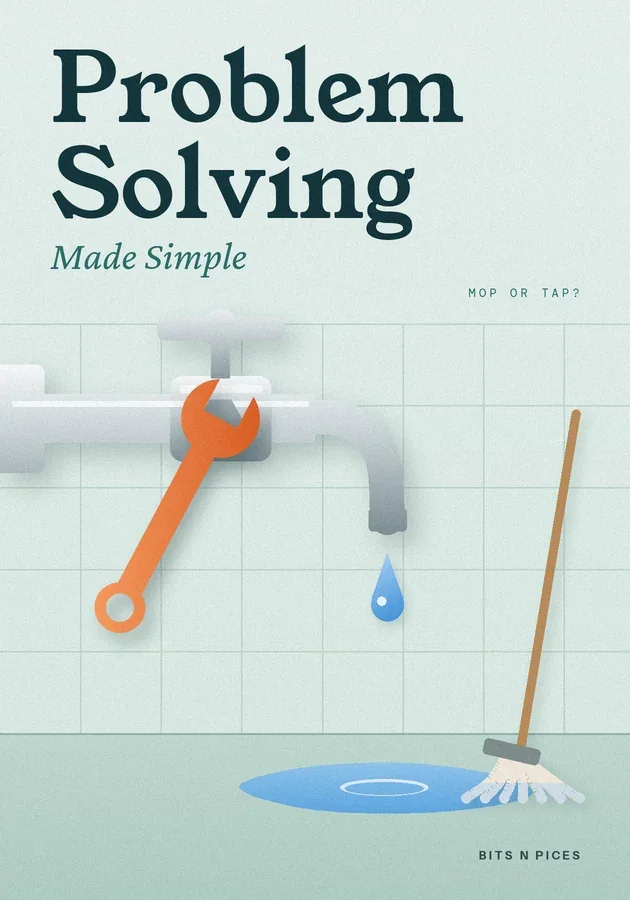
- Before buying, scolding or fixing, check whether you are mopping the floor or fixing the tap, because only fixing the tap stops the puddle returning.
- Problem solving is a learnable skill, not a talent, so praise the trying and the adjusting in your children rather than the first right answer.
- When your child brings you a problem, ask what they have tried before offering help, and give the smallest hint that gets them moving again.
- Before fixing anything for an upset child or partner, ask whether they want ideas or want you to listen, and respect the answer.
이 비트의 내용
- Why problems feel bigger than they are
When you are tired and busy, problems rarely arrive one at a time. The broken zip, the late homework, the argument about the television and the leaking gutter blur into one feeling: everything is chaos.
- Five myths that make problems harder
Myth one: good problem solvers get it right first time. They try something, check it and adjust, so a first attempt is a draft, not a verdict.
- Mopping the floor or fixing the tap
Picture a leaking tap. Mopping the floor deals with today's puddle; fixing the tap stops tomorrow's.
- What, why, try: the three questions
If you remember one thing from this book, make it three questions. What exactly is going wrong?
- Hand the problem back, gently
When a child brings you a problem, the quickest help is to solve it. It is also the help that teaches least.
- Fix it or listen: ask first
Not every problem wants solving straight away. When a child or a partner arrives upset, a parent's instinct is to fix: here is what you should do.
여섯 가지 방법으로 배우기
이 책을 위해 시각화, 마인드맵, 연습, 시나리오, 챌린지, 복습 기능이 준비되어 있어요.
퀴즈와 플래시카드
읽은 내용을 테스트하고 간격 반복으로 확실히 기억하세요.
Bits AI
보고 있는 책, 섹션, 퀴즈 질문에 대해 답변해 줍니다.





