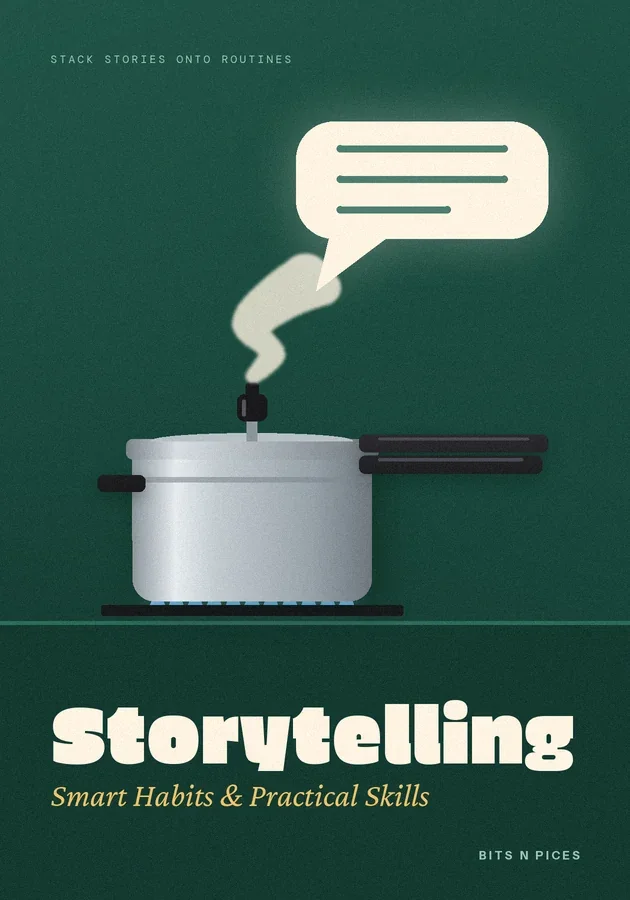
Storytelling: Smart Habits & Practical Skills
핵심 요약
- Stack storytelling onto things your family already does, such as cooking, folding laundry or the walk to school, so it needs no new time.
- Side-by-side chores make telling easier for children, especially teenagers, because hands are busy and nobody has to hold eye contact.
- A weekly story night with a teller rota and a talking object gives every child a turn to plan, tell and be heard.
- Remove friction from stories with a seed pad and prompt cards, and add friction to screens with a charging station in the hall.
- When a busy week arrives, keep the cue and cut the length, and restart at the very next cue rather than waiting for next month.
이 비트의 내용
- Storytelling runs on habits, not talent
Families that tell stories easily are rarely more gifted than yours. Usually they have habits.
- Stack stories onto chores and journeys
The best stacks are routines you already do side by side: cooking, folding laundry, ironing uniforms, the walk to school, the wait at a bus stop. Side by side matters.
- A weekly story night with a teller rota
Stacked stories are short and chatty. A weekly story night adds a different skill: planning a story and telling it to a listening room.
- Friction decides which habit wins
Friction is the small effort standing between you and an action. It sounds trivial, yet it often decides what happens.
- Tracking the habits through busy weeks
Tracking tells you whether a habit is actually happening rather than whether it feels as if it is. Keep it light: a monthly calendar on the fridge, a dot on any day a stacked story happened and a star for story night.
- Adjusting the habits as children grow
Story habits have to change shape as children do. Under-fives do best with tiny stacks, such as bath time or pairing socks, and one-sentence stories about whatever they are holding.
여섯 가지 방법으로 배우기
이 책을 위해 시각화, 마인드맵, 연습, 시나리오, 챌린지, 복습 기능이 준비되어 있어요.
퀴즈와 플래시카드
읽은 내용을 테스트하고 간격 반복으로 확실히 기억하세요.
Bits AI
보고 있는 책, 섹션, 퀴즈 질문에 대해 답변해 줍니다.