

핵심 요약
- A startup is an experiment in extreme uncertainty, so treat every plan as a hypothesis
- 가장 위험한 가설을 검증할 최소한의 것을 만들고, 실제 사용자 반응을 측정하세요
- 스타트업의 성장은 출시한 기능이 아니라 검증된 배움으로 측정됩니다
- 누적 가입자 같은 허상 지표 대신 코호트와 A/B 테스트로 성장을 판단하세요
- 정해진 주기마다 피벗할지 유지할지 결정하고, 망설임 없이 피벗하세요
이 비트의 내용
- Startups are experiments, not plans
Picture two founders in a Bengaluru co-working space. They spend 8 months building a polished app in secret, launch it, and hear silence.
- Build, measure, learn in tight loops
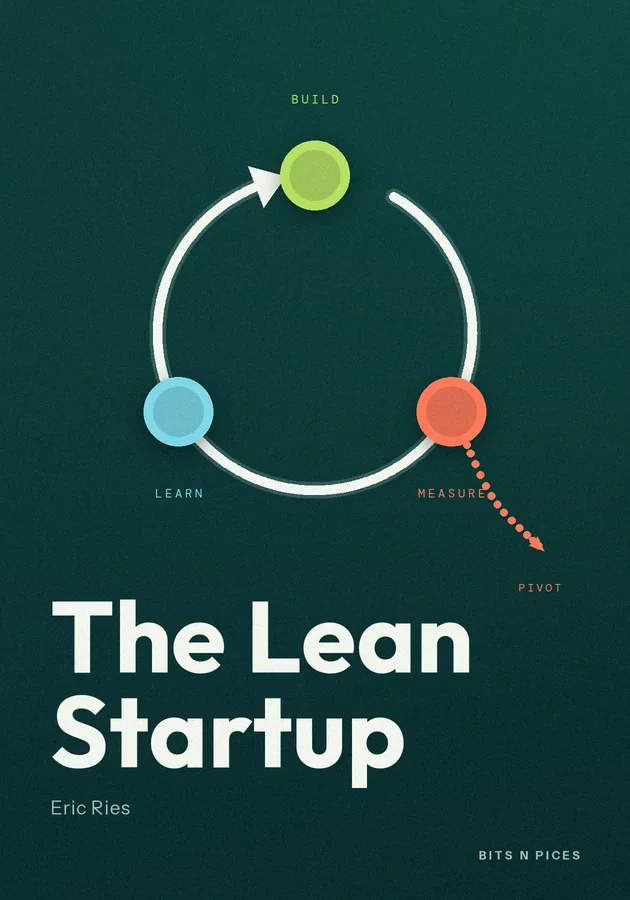
The engine of the book is a loop. You build something small, measure how real people respond, learn from the data, and go around again.
- The minimum viable product
The minimum viable product, or MVP, is the smallest thing you can put in front of real users that tests your most important assumption. It is not a cheap, broken version of the final product; it is a targeted experiment.
- Vanity metrics versus real learning
Total signups keep going up. Page views keep climbing.
- Pivot or persevere
At some point the data stops improving. The loop runs, the numbers barely move, and the team keeps hoping the next feature will fix it.
- 직접 적용해 보기
Start by writing down the single riskiest assumption behind whatever you are building, the one that would sink the idea if it were wrong. Then design the cheapest possible test of that assumption, whether that is a landing page, a WhatsApp poll, a manual version of the service, or 10 honest conversations with potential customers.
여섯 가지 방법으로 배우기
이 책을 위해 시각화, 마인드맵, 연습, 시나리오, 챌린지, 복습 기능이 준비되어 있어요.
내레이션 제공
Michael이나 Bella가 읽어주는 이 비트를 들어보세요.
퀴즈와 플래시카드
읽은 내용을 테스트하고 간격 반복으로 확실히 기억하세요.
Bits AI
보고 있는 책, 섹션, 퀴즈 질문에 대해 답변해 줍니다.





