핵심 요약
- Evolution is best understood as competition between genes, not between species or individuals
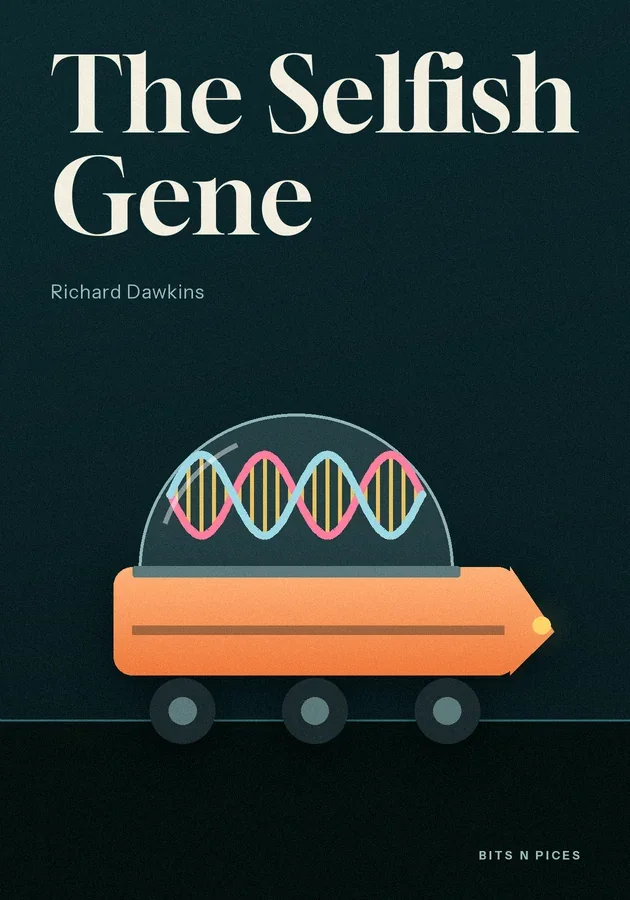
- Bodies are survival machines that genes build to copy themselves into the future
- Helping relatives makes genetic sense because they carry copies of your genes
- Cooperation can evolve between strangers when interactions repeat and cheats are punished
- Ideas spread and mutate like genes; Dawkins calls these cultural replicators memes
이 비트의 내용
- Evolution seen from the gene's chair
Ask why a bird risks its life to warn the flock about a hawk, or why a worker bee stings and dies for the hive. The old answer was that animals act for the good of the species.
- Bodies are survival machines
Dawkins invites you to look at an elephant, a tulip, or yourself, and see a vehicle. Around 4 billion years ago, molecules that could copy themselves appeared in the primordial soup.
- Why animals help their relatives
If genes are selfish, why does any creature help another? The answer is kin selection, and the arithmetic is beautiful.
- Nice guys can finish first
Between unrelated individuals, cooperation looks impossible for selfish genes, yet vampire bats share blood with hungry roostmates and cleaner fish are not eaten by their clients. Dawkins uses game theory to show how.
- Memes, the second replicator
In the final chapters Dawkins asks whether genes are the only things that evolve. He proposes that ideas, tunes, fashions, and beliefs are also replicators, jumping from brain to brain by imitation.
- 직접 적용해 보기
This is a science book, but its lens is useful in daily life. This week, when you notice a strong urge, whether jealousy, cravings for sugar, or fierce protectiveness toward your child, ask what a gene might gain from it, then decide with your conscious mind whether to follow.
여섯 가지 방법으로 배우기
이 책을 위해 시각화, 마인드맵, 연습, 시나리오, 챌린지, 복습 기능이 준비되어 있어요.
내레이션 제공
Michael이나 Bella가 읽어주는 이 비트를 들어보세요.
퀴즈와 플래시카드
읽은 내용을 테스트하고 간격 반복으로 확실히 기억하세요.
Bits AI
보고 있는 책, 섹션, 퀴즈 질문에 대해 답변해 줍니다.