

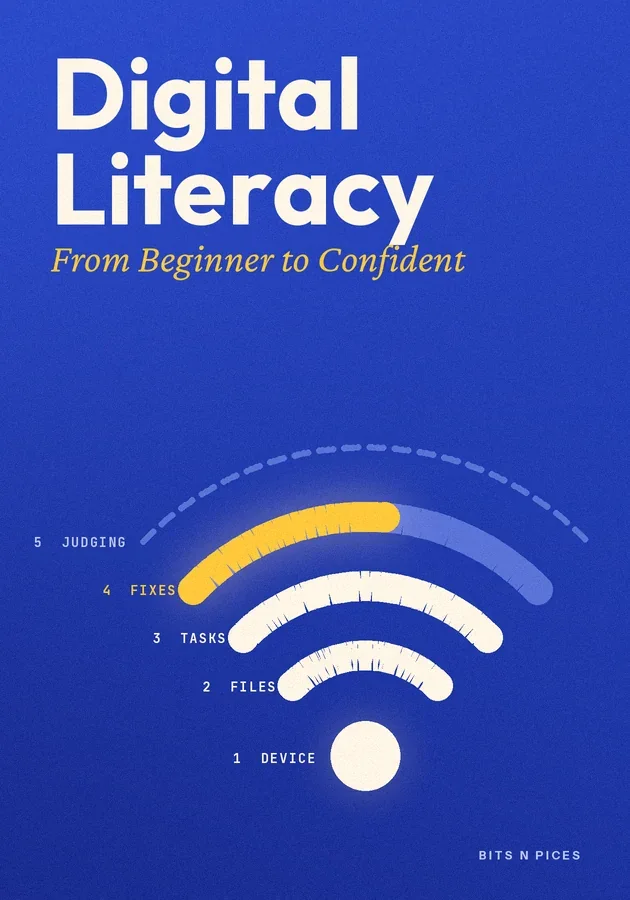
Digital Literacy: From Beginner to Confident
Belangrijkste inzichten
- Digital confidence is not knowing every app; it is being able to work out an unfamiliar screen by exploring, undoing and searching.
- Place yourself honestly on the five rungs for each skill, then practise the next rung up rather than repeating what you can already do.
- Name files by date and topic, keep them in a few broad folders, and protect your main email first because it unlocks everything else.
- When something breaks, climb the fix ladder in order: restart, check the connection, update, then search the exact words of the error.
- You have moved up a rung when you can do the task alone twice, explain it to someone else and recover when it goes wrong.
In deze bit
- The five rungs and where you stand
Digital literacy is the everyday ability to use devices and the internet to find things, get tasks done, communicate and stay safe. It is less a single skill than a ladder.
- Rung one: using the device without fear
The first rung is about moving around a device calmly. That means knowing the handful of controls that appear almost everywhere: the back arrow, the home button or gesture, the menu shown as three dots or three lines, the search box and the settings gear.
- Rung two: files, folders and the master key
Rung two is keeping your digital life in order. Every photo, form and download is a file stored somewhere, either on the device itself or in cloud storage, which means a company's computers that you reach over the internet.
- Rung three: finishing a real task end to end
Rung three is where digital skills start paying for themselves. It means taking an errand you once did in a queue and completing it online, from the first click to the saved receipt.
- Rung four: fixing glitches and dodging scams
On rung four you stop waiting for a younger relative to fix things. When a device misbehaves, climb the fix ladder in order.
- Rung five: judging, teaching and proving progress
The top rung is judgement. Before you believe or share something, ask who made it, what they want from you, and whether an independent second source says the same.
Leer het op zes manieren
Visualiseren, Mindmappen, Oefenen, Scenario, Uitdaging en Herhalen zijn geschreven voor dit boek.
Quiz en flitskaarten
Test wat je hebt gelezen en onthoud het beter met gespreide herhaling.
Bits AI
Het geeft antwoord over het boek, de sectie of de quizvraag waar je mee bezig bent.





