

Nutrition: 30-Day Growth Guide
Belangrijkste inzichten
- Spend the first week only noticing what, when and why you eat, because a change built on a guess usually targets the wrong meal.
- Build one plate at a time, with vegetables taking the biggest share, a protein, a grain or starchy base, and water as the usual drink.
- Change one thing per week, such as breakfast or the afternoon snack, and keep it small enough to survive your busiest day.
- Measure progress with behaviours you control, like days with a vegetable at lunch, rather than chasing the bathroom scale every morning.
- When a week slips, shrink the action and restart tomorrow, and see a doctor before any big change if you have a health condition.
In deze bit
- The shape of your four weeks
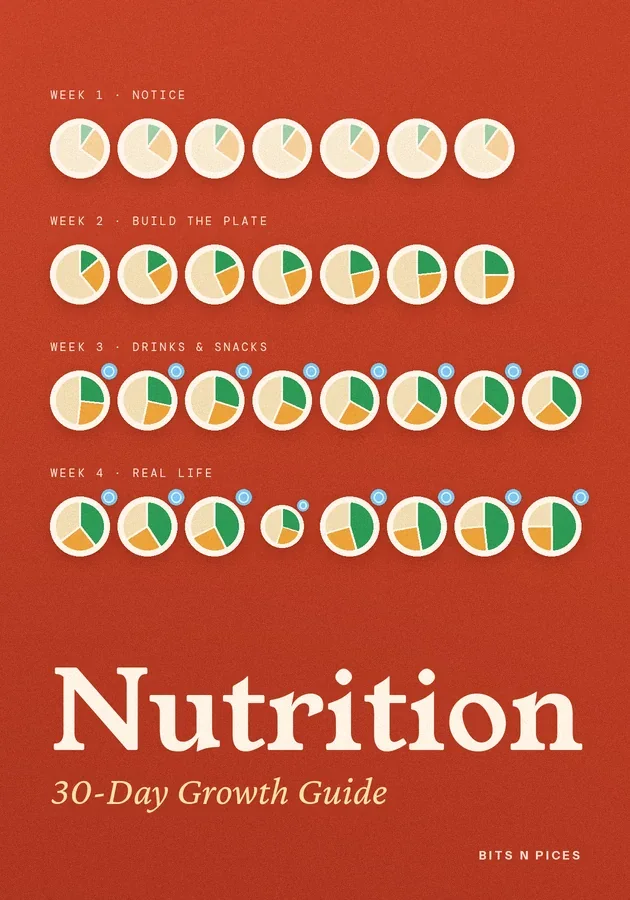
This programme gives you four weekly themes and one small action a day, most taking less time than making tea. Week one is for noticing: you change nothing and simply learn how you eat now.
- Week one: a baseline without judgement
The first week gives you a baseline, a snapshot of your normal eating before anything changes. Each day, jot down what you ate and drank, roughly when, and one word for why: hungry, bored, tired, social or habit.
- Week two: building a balanced plate
Week two turns one meal a day into a balanced plate. Picture the plate in parts.
- Week three: drinks, snacks and labels
Week three looks at the extras that slip in unnoticed. Sweet drinks come first: sweetened tea, sodas, packaged juices and milky café drinks add sugar without making you feel full, so they rarely replace a meal.
- Week four: making it survive real life
The last full week tests your habits against ordinary chaos: late shifts, travel, guests and celebrations. The skill here is planning for the predictable.
- Keeping score kindly when a week slips
Progress in this programme is measured by behaviours you control. Keep a simple tick sheet with one row per habit and one box per day.
Leer het op zes manieren
Visualiseren, Mindmappen, Oefenen, Scenario, Uitdaging en Herhalen zijn geschreven voor dit boek.
Quiz en flitskaarten
Test wat je hebt gelezen en onthoud het beter met gespreide herhaling.
Bits AI
Het geeft antwoord over het boek, de sectie of de quizvraag waar je mee bezig bent.





