

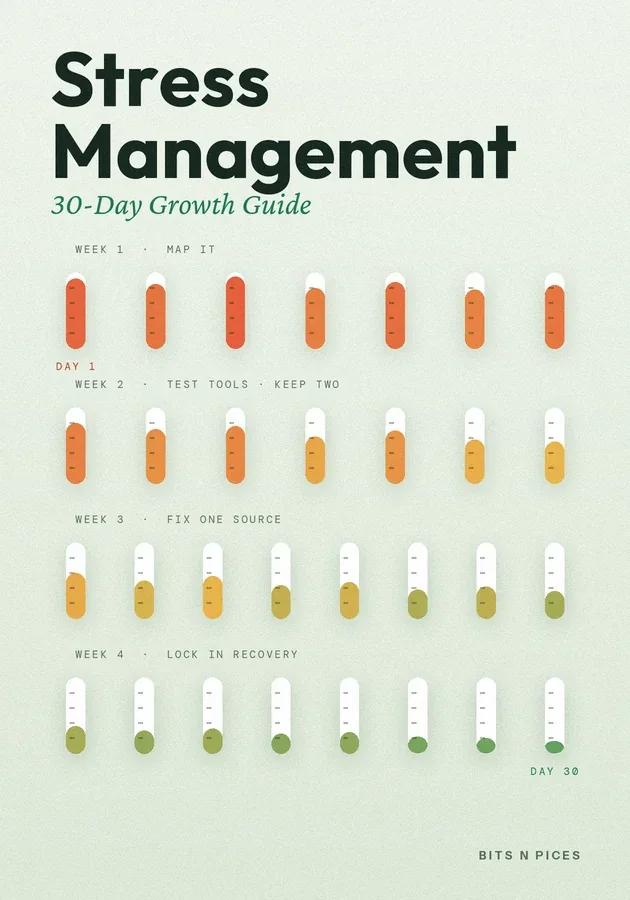
Stress Management: 30-Day Growth Guide
Belangrijkste inzichten
- Measure before you change anything: a two-minute daily log for one week shows which triggers and times drive most of your stress.
- Test calming tools like experiments, rating your stress before and after each one, and keep only the two that clearly work for you.
- Separate settling from numbing, because scrolling or an extra coffee can feel like relief tonight while quietly raising tomorrow's stress.
- In week three, change one source of stress, such as a late-evening email habit, instead of only soothing its effects.
- When a week slips, shrink the daily action and repeat that week; never missing twice matters more than a perfect streak.
In deze bit
- How the thirty days are built
Thirty days is long enough to see patterns and short enough to commit to. This programme runs in four weekly themes, each with a daily micro-action of five to fifteen minutes.
- Week one: map your stress before changing it
The temptation is to start fixing on day one. Resist it for a week.
- Week two: test your downshift tools
Week two is about lowering stress in the moment, and the attitude is scientific. Each day, when a stress moment arrives, try one tool and rate your stress before and after.
- Week three: reduce the load at its source
Calming tools treat the effects of stress. Week three goes after causes.
- Week four: lock in recovery and support
The final week makes the gains last. Recovery is whatever refills you after demanding days, and the programme asks you to protect four basics: a steady sleep and wake time, some daily movement, one thing each week you do purely for enjoyment, and regular contact with people who leave you feeling better.
- When a week slips, and your day-thirty review
Almost every programme has a week that goes wrong: illness, a deadline, a family visit. Treat it as data, not failure.
Leer het op zes manieren
Visualiseren, Mindmappen, Oefenen, Scenario, Uitdaging en Herhalen zijn geschreven voor dit boek.
Quiz en flitskaarten
Test wat je hebt gelezen en onthoud het beter met gespreide herhaling.
Bits AI
Het geeft antwoord over het boek, de sectie of de quizvraag waar je mee bezig bent.





