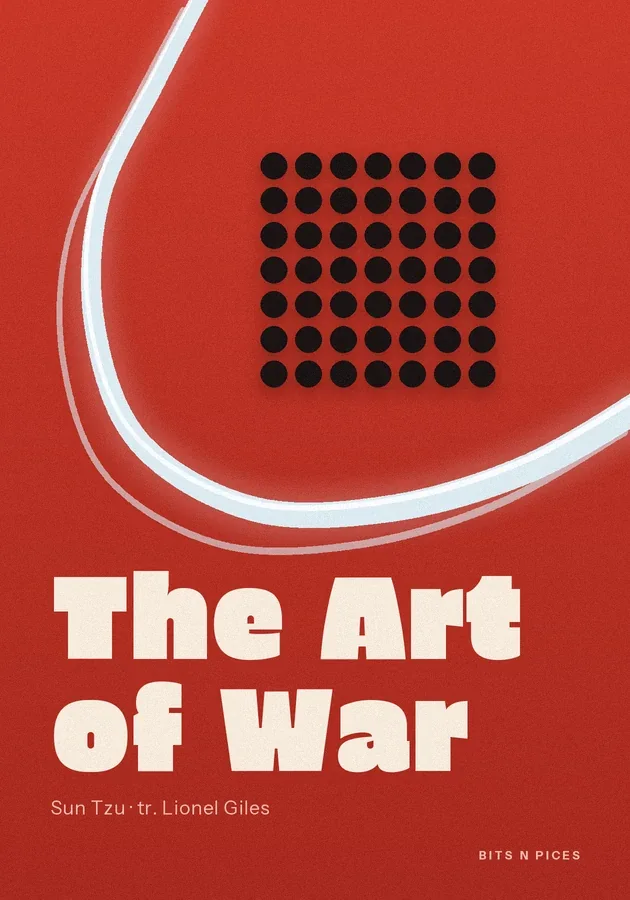
The Art of War
Belangrijkste inzichten
- The highest skill is making the battle unnecessary, not winning it
- Know yourself and your opponent honestly before you commit to any fight
- Strike where the other side is unprepared and keep your own shape unpredictable
- Long campaigns exhaust everyone, so prize speed over slow perfection
- A leader needs both care and strictness, and no exploitable weaknesses of temper
In deze bit
- The big idea
Sun Tzu was a general in ancient China, and the 13 short chapters credited to him have been read by soldiers, chief executives, cricket captains and startup founders for roughly 2,500 years. Lionel Giles's 1910 translation is the one most English readers know.
- The best victory needs no battle
Sun Tzu ranks ways of winning. Lowest is besieging a walled city, which drains months and men.
- Know yourself, know the other side
Sun Tzu's most quoted principle is that if you know your enemy and know yourself, you need not fear the outcome of many battles; if you know only yourself, you will win some and lose some; and if you know neither, you are in danger every time. The book opens with a checklist for this kind of calculation: which side has the moral cause and unity, which understands the weather and terrain, which has the abler commander, which has better discipline and supply.
- Be formless like water
Sun Tzu treats deception and flexibility as the heart of strategy. Show weakness where you are strong and strength where you are weak.
- Speed, cost and the general's character
Sun Tzu says he has never seen a long war that benefited any country. Prolonged campaigns exhaust the treasury, blunt the weapons and dampen morale, and they invite other enemies to move.
- Put it to work
This week, before your next confrontation at work or home, ask whether you can make the fight unnecessary by changing the conditions instead of winning it. Write an honest two column assessment of one competitive situation: your real strengths and weaknesses, and theirs, based on evidence rather than hope.
Leer het op zes manieren
Visualiseren, Mindmappen, Oefenen, Scenario, Uitdaging en Herhalen zijn geschreven voor dit boek.
Voorgelezen
Luister naar deze bit, voorgelezen door Michael of Bella.
Quiz en flitskaarten
Test wat je hebt gelezen en onthoud het beter met gespreide herhaling.
Bits AI
Het geeft antwoord over het boek, de sectie of de quizvraag waar je mee bezig bent.