

The Essential Guide to Budgeting
Belangrijkste inzichten
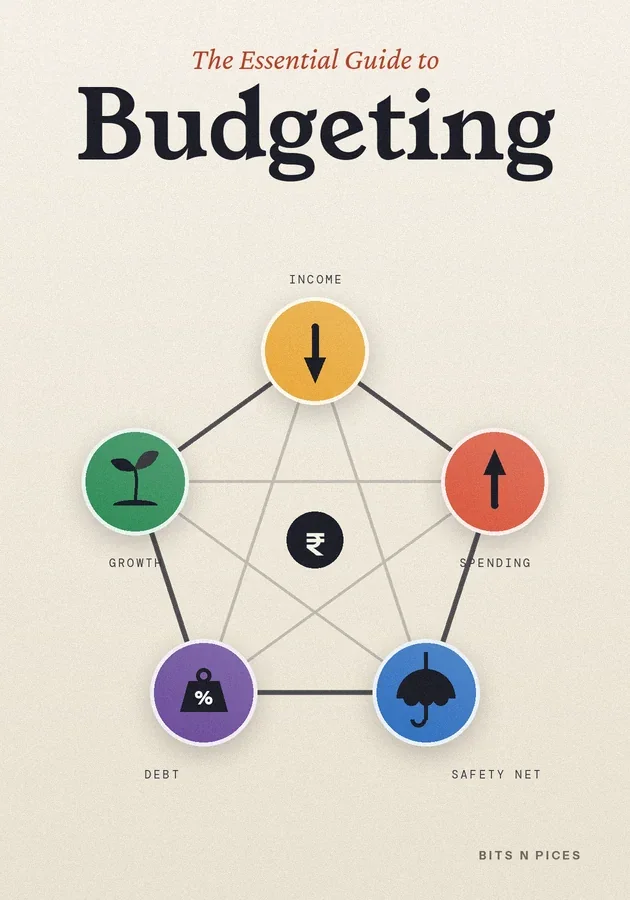
- Budgeting rests on five connected ideas, income, spending, a safety net, debt and growth, and a change in one affects all the others.
- Cash flow is simply money in minus money out over a month, and a positive figure is the fuel for every other goal.
- Choose a budgeting method that fits your life: a simple rule for a quick start, or a detailed plan when you want more control.
- Build a safety net before chasing growth, because an emergency fund stops one bad month from turning into lasting debt.
- Interest works in both directions: expensive debt grows against you and patient saving grows for you, so clear costly debt early.
In deze bit
- Five big ideas and how they connect
Budgeting can look like a hundred separate tips, but nearly all of them belong to five big ideas. Income is the money that comes in.
- Income and cash flow: where everything starts
Your income is every amount that arrives: salary, tips, freelance payments, rent from a spare room, support from family. For budgeting, the figure that counts is net income, the money that reaches you after tax and other deductions.
- Needs, wants and choosing a method
Once you know your cash flow, you decide how to divide it. The first split is needs against wants.
- The safety net: buffer, emergency fund, insurance
The safety net is the part of a budget that does nothing on a normal day and everything on a bad one. It has three layers.
- Debt and growth: interest works both ways
Interest is the price of using money over time. When you borrow, you pay interest on the principal, the amount borrowed.
- What to prioritise, and what to ignore
With the whole map in view, a sensible order appears. First, cover your needs and the minimum payment on every debt, because missed payments bring fees and damage that are hard to undo.
Leer het op zes manieren
Visualiseren, Mindmappen, Oefenen, Scenario, Uitdaging en Herhalen zijn geschreven voor dit boek.
Quiz en flitskaarten
Test wat je hebt gelezen en onthoud het beter met gespreide herhaling.
Bits AI
Het geeft antwoord over het boek, de sectie of de quizvraag waar je mee bezig bent.





