

Workplace Success: Skills for the Future
Belangrijkste inzichten
- Over the next decade, success at work will be judged more by outcomes and adaptability than by years served, titles held or hours of visible presence.
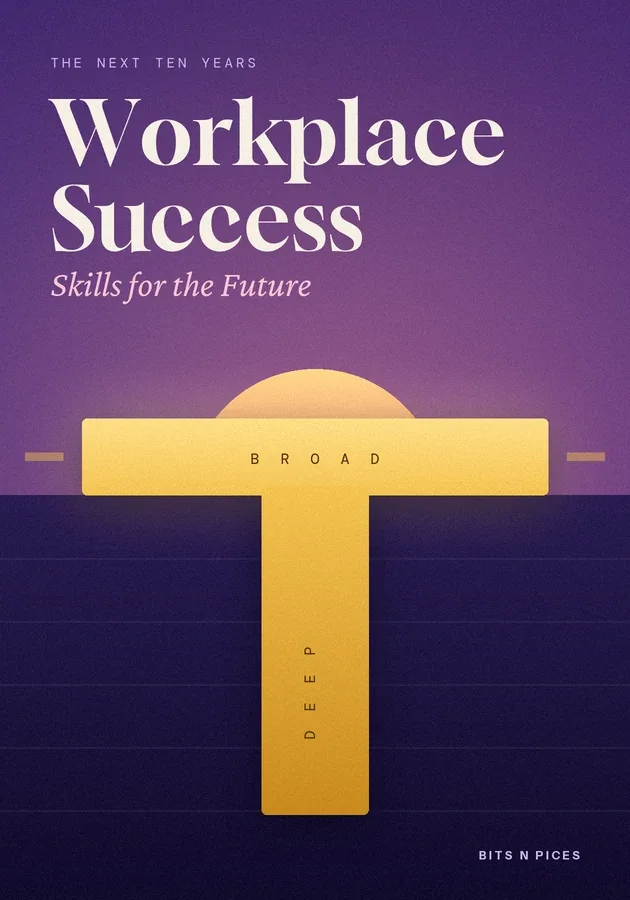
- Build a T-shaped profile: go deep where work is hardest to automate, and broad enough in neighbouring areas to translate between specialists.
- Treat learning as part of the job, with one stretch task each quarter, a two-line weekly log and teaching others what you learn.
- When tools take over routine tasks, stay accountable for the result by owning the exceptions, checking outputs and keeping the underlying skill alive.
- Instead of predicting jobs for your children, build durable skills through tasks they own, real work experience and conversations with working adults.
In deze bit
- Where workplace success is heading
Nobody can forecast the workplace of ten years from now in detail, and confident predictions have been wrong in both directions before. A few directions, though, are broad enough that most observers share them.
- Durable skills and the depth-versus-breadth choice
Durable skills are capabilities that keep their value as tools change: judgement with incomplete information, explaining complex work in plain words, collaborating across teams and cultures, managing yourself without supervision, and learning quickly. They transfer between roles and industries, which matters when roles themselves keep shifting.
- Learning as part of the job, not an extra
If skills date faster, learning cannot be a course taken once every few years. It has to live inside the job.
- Working alongside automation without losing value
When a tool takes over part of your work, the useful question is not whether you are replaced but where your value moves. Usually it moves in three directions: deciding what should and should not be automated, handling the exceptions the tool cannot, and explaining the change to colleagues and customers.
- Risks and opportunities over the next decade
The same forces that open doors can also remove floors. On the risk side, roles can erode faster than employers retrain people, always-on tools blur the line between work and home, more work is offered on short contracts or through apps with fewer protections, and crude measures such as activity-tracking software can reward looking busy over doing well.
- Preparing children for work that keeps changing
Parents often ask which jobs will be safe for their children. It is an understandable question with no reliable answer.
Leer het op zes manieren
Visualiseren, Mindmappen, Oefenen, Scenario, Uitdaging en Herhalen zijn geschreven voor dit boek.
Quiz en flitskaarten
Test wat je hebt gelezen en onthoud het beter met gespreide herhaling.
Bits AI
Het geeft antwoord over het boek, de sectie of de quizvraag waar je mee bezig bent.





