Emotional Intelligence
Principais ideias
- IQ opens doors, but handling emotions decides how far you actually go
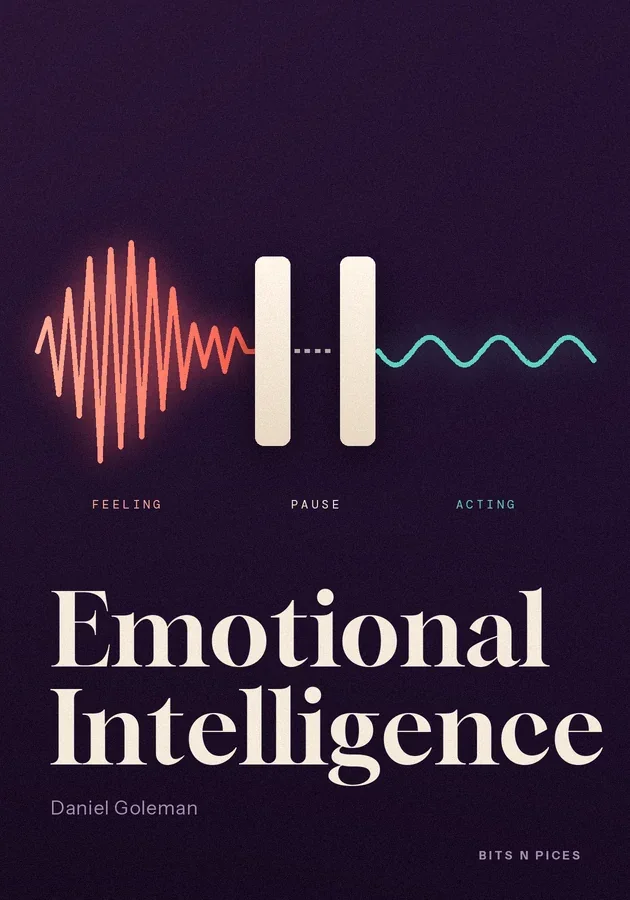
- An emotional hijack fires before thinking can catch up, so build a pause
- Naming a feeling as it happens is the foundation of every other skill
- Delaying gratification and staying hopeful predict success better than test scores
- Empathy is learned by reading faces and tone, not just by listening to words
Dentro deste bit
- Why smart people still blow it
Think of the brilliant classmate who topped every exam and then struggled in every job, and the average student who now runs a team everyone wants to join. Daniel Goleman, a psychologist and science journalist, argues that the gap is explained by a set of abilities that schools barely measure: knowing your own feelings, managing them, motivating yourself, reading other people, and handling relationships.
- The hijack in your head
Why do you snap at a loved one over a small thing? Goleman explains that the brain has two routes for emotional information.
- Know yourself, then steer yourself
Goleman's framework begins with self-awareness: the ability to notice a feeling while it is happening, rather than an hour later. People who can name their emotions have a kind of neutral observer inside; they can say I am getting anxious instead of simply being anxious.
- The marshmallow and the flow state
The third domain is motivation, and here Goleman leans on Walter Mischel's famous marshmallow experiments. Four-year-olds who could wait for a bigger reward grew into teenagers who were more confident, more focused and better at coping with frustration.
- Reading others and handling them
The last two domains face outward. Empathy is the ability to sense what someone else feels, and Goleman shows it depends on reading nonverbal cues: tone, posture, the flicker across a face.
- Coloque em prática
This week, practise catching emotions early: three times a day, pause and name what you are feeling in one word, and notice where it shows up in your body. When you feel a hijack starting, buy time before you speak, whether by counting slowly, stepping out, or drafting the angry message but not sending it.
Aprende de seis maneiras
Visualizar, Mapa Mental, Praticar, Cenário, Desafio e Revisão foram criados para este livro.
Narrado
Ouve este bit, lido por Michael ou Bella.
Quiz e flashcards
Testa o que leste e guarda-o com repetição espaçada.
Bits AI
Responde sobre o livro, a secção e a pergunta do quiz em que estás.