

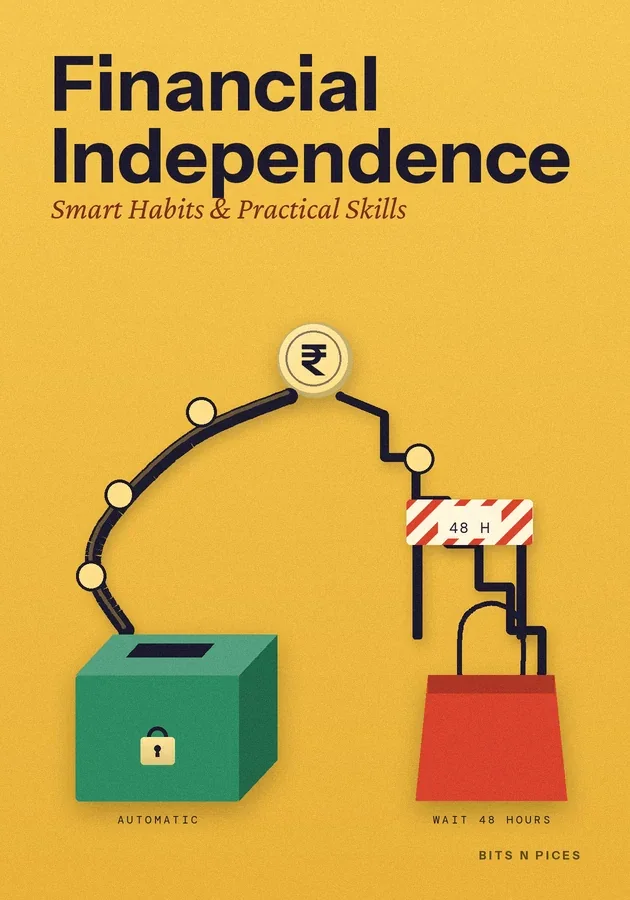
Financial Independence: Smart Habits & Practical Skills
Principais ideias
- Children learn money from what they watch you do, so calm, regular habits at home teach more than any lecture about saving.
- Decide once and automate it: a payday transfer to savings and bills paid on fixed dates remove dozens of tempting monthly decisions.
- Add friction to spending you usually regret, such as a forty-eight-hour wait, and remove every bit of friction from saving.
- Give children small, regular pocket money with spend, save and share jars so they practise real choices while mistakes are cheap.
- Hold a ten-minute weekly money check and a short monthly family talk, tracking one or two visible numbers without blame.
Dentro deste bit
- Why habits beat willpower with money
Financial independence, being able to meet your family's needs from your own resources without leaning on loans or luck, is built far more by habits than by big decisions. Willpower runs low by the evening; a habit runs on its own.
- Automate the good, add friction elsewhere
The strongest money system decides once and then runs by itself. Set an automatic transfer that moves a fixed amount into a separate savings account the day after your salary arrives.
- Cues and routines for the whole household
A family money routine works best when it hangs on something that already happens. Pairing a new habit with an existing one, sometimes called habit stacking, gives it a ready-made cue.
- Teaching children with pocket money and jars
Pocket money is less about the amount and more about practice. A small, regular sum, paid on the same day each week, lets a child make real choices while mistakes are cheap.
- Tracking that a family will keep
Tracking fails when it becomes a spreadsheet nobody opens. Choose one or two numbers that matter and make them visible.
- Keeping it going through lean months
Every family hits months when the system strains: school fees, a festival, a job change, a repair. The habits survive if you plan for these rather than treating them as failures.
Aprende de seis maneiras
Visualizar, Mapa Mental, Praticar, Cenário, Desafio e Revisão foram criados para este livro.
Quiz e flashcards
Testa o que leste e guarda-o com repetição espaçada.
Bits AI
Responde sobre o livro, a secção e a pergunta do quiz em que estás.





