

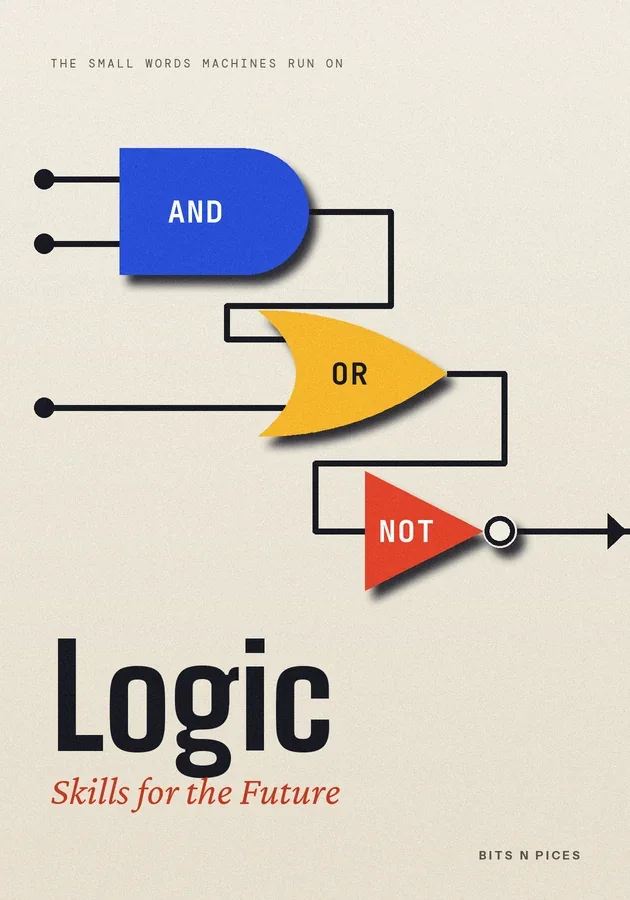
Logic: Skills for the Future
Principais ideias
- As software produces more fluent answers, the skill that gains value is asking for the reason behind a claim and checking whether it holds.
- And means both, or means at least one, and not flips a condition; practising these three words with children builds the logic inside every app.
- Treat predictions as maybes: ask how sure, in numbers, and change your estimate when new evidence arrives rather than defending your first guess.
- When a clip or a voice could be faked, leave the page and check what independent sources say before you believe it or share it.
- Raise a questioner, not a cynic: trust claims in proportion to their evidence, and praise good reasoning even when it argues against you.
Dentro deste bit
- Why reasoning gains value as machines talk
Reasoning is getting from what you already know to what follows from it. A claim is the point someone makes; evidence is what shows it is true.
- The small words machines run on
Every app your children use runs on rules built from three small words. And means both conditions must be true.
- Thinking in maybes
Much of the world your children will read about arrives as a probability: a 70 per cent chance of rain, a forecast that prices will rise. A probability measures how likely something is, from impossible to certain.
- Checking sources when anything can be faked
Software can now produce convincing voices, faces and videos of people saying things they never said, often called deepfakes. As the tools improve, looking harder at a clip will tell you less and less about whether it is real.
- Raising a questioner, not a cynic
The aim is not a child who believes nothing. A cynic, someone who assumes everything is false, is as easy to fool as someone who believes everything, because both have stopped weighing evidence.
- Risks, openings and a five-year family plan
Two risks deserve names. Automation bias is trusting an answer more because a machine produced it; the guard is to ask a machine the same questions you would ask a person.
Aprende de seis maneiras
Visualizar, Mapa Mental, Praticar, Cenário, Desafio e Revisão foram criados para este livro.
Quiz e flashcards
Testa o que leste e guarda-o com repetição espaçada.
Bits AI
Responde sobre o livro, a secção e a pergunta do quiz em que estás.





