Storytelling Made Simple
Principais ideias
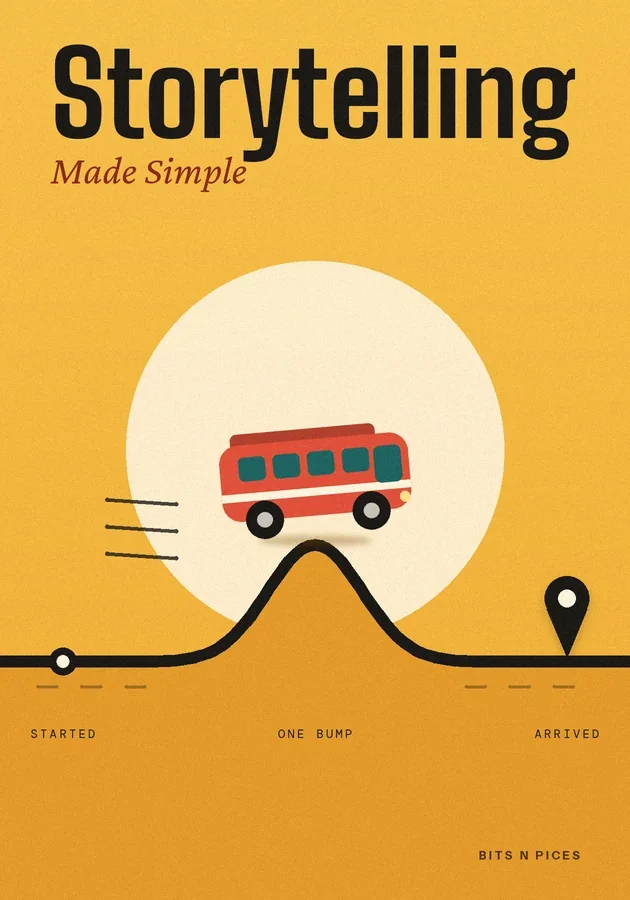
- Picture every story as a trip with one bump: where things started, the problem or surprise, and where everyone arrived afterwards.
- Ordinary life is enough material; a burnt pan or a missed bus carries a story as well as any adventure does.
- Start near the bump, keep only one bump, and say where you arrived in a single line before you stop talking.
- Children copy the shape of the stories they hear at home, so tell your small mistakes and ask about their bumps.
- Listen before telling when someone is upset, and ask before sharing a story that belongs to someone else, especially a child.
Dentro deste bit
- Storytelling is smaller than you think
Beatriz works at a hotel reception desk in Recife and has two children, aged eight and twelve. When her son's school asked parents to tell a short story about their work on careers day, she panicked.
- One picture: a trip with one bump
Picture any story as a short trip. You start somewhere, you hit a bump in the road, and you arrive somewhere slightly different from where you set out.
- Six myths that make it feel hard
Most parents who say they cannot tell stories are held back by beliefs, not ability. Six are worth dropping.
- The three moves that do most of the work
If you remember only three things, remember these. Start near the bump, not at breakfast: most stories improve when the first two sentences are deleted.
- How children pick up stories from you
Children learn the shape of a story mostly by hearing it, long before anyone teaches it. The stories told at your table become their template.
- When a story helps and when it does not
Stories are powerful, which is exactly why they need judgement. Three situations call for restraint.
Aprende de seis maneiras
Visualizar, Mapa Mental, Praticar, Cenário, Desafio e Revisão foram criados para este livro.
Quiz e flashcards
Testa o que leste e guarda-o com repetição espaçada.
Bits AI
Responde sobre o livro, a secção e a pergunta do quiz em que estás.