

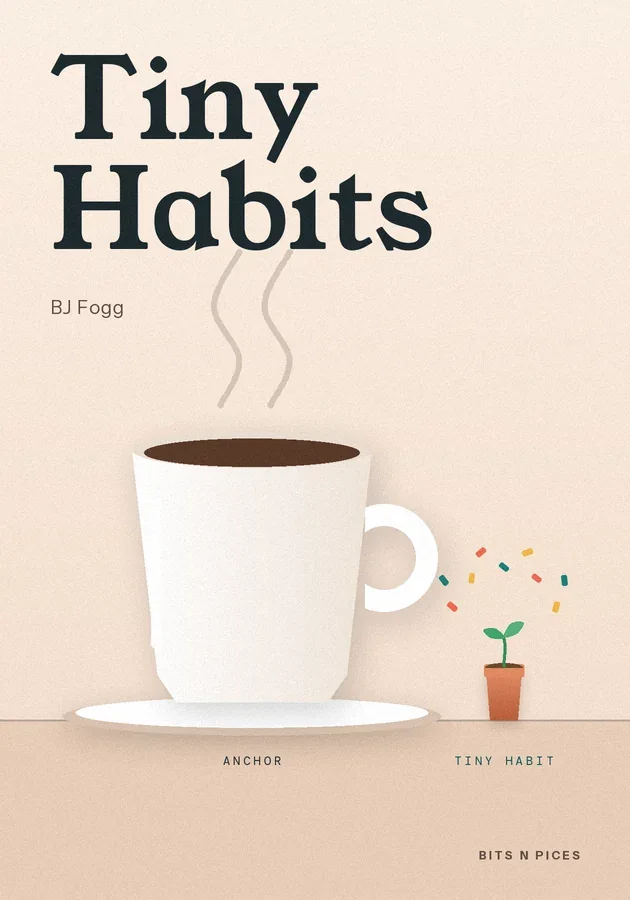
Tiny Habits
Principais ideias
- O comportamento acontece quando motivação, habilidade e um gatilho se encontram
- Crie um hábito tão pequeno que você consiga fazer até no seu pior dia
- Vincule o novo hábito a algo que você já faz todo dia
- Comemore na hora: a emoção é o que fixa o hábito no cérebro
- Ajuste o ambiente em vez de depender da força de vontade ou da motivação
Dentro deste bit
- Mudar é mais fácil quando a mudança é minúscula
BJ Fogg, a Stanford behaviour scientist, once decided to do 2 push-ups every time he went to the bathroom. It sounds silly, but within months he was doing dozens a day without effort.
- A equação do comportamento
Fogg's central model says a behaviour happens when 3 things line up at the same moment: motivation, ability and a prompt. He writes it as B equals MAP.
- Reduza até ficar fácil
Fogg suggests two ways to make any behaviour tiny. Either take a starter step, like putting on your running shoes rather than running, or scale down the whole thing, like flossing 1 tooth instead of all of them.
- Vincule a algo que você já faz
A new habit needs a reliable prompt, and Fogg says the best prompt is a behaviour already in your life. He calls this an anchor.
- Comemore para fixar o hábito
This is the part most habit advice misses. Fogg argues that habits form through emotion, not repetition alone.
- Coloque em prática
This week, choose one habit you want and shrink it until it takes under 30 seconds, like 1 push-up or writing 1 sentence. Find an anchor by listing 5 things you already do every day and picking the one that happens in the right place and at the right time.
Aprende de seis maneiras
Visualizar, Mapa Mental, Praticar, Cenário, Desafio e Revisão foram criados para este livro.
Narrado
Ouve este bit, lido por Michael ou Bella.
Quiz e flashcards
Testa o que leste e guarda-o com repetição espaçada.
Bits AI
Responde sobre o livro, a secção e a pergunta do quiz em que estás.





