

核心要点
- Do your hardest, most valuable task first thing, before anything else can crowd it out
- Clarity is the starting point: write goals down and plan every day on paper
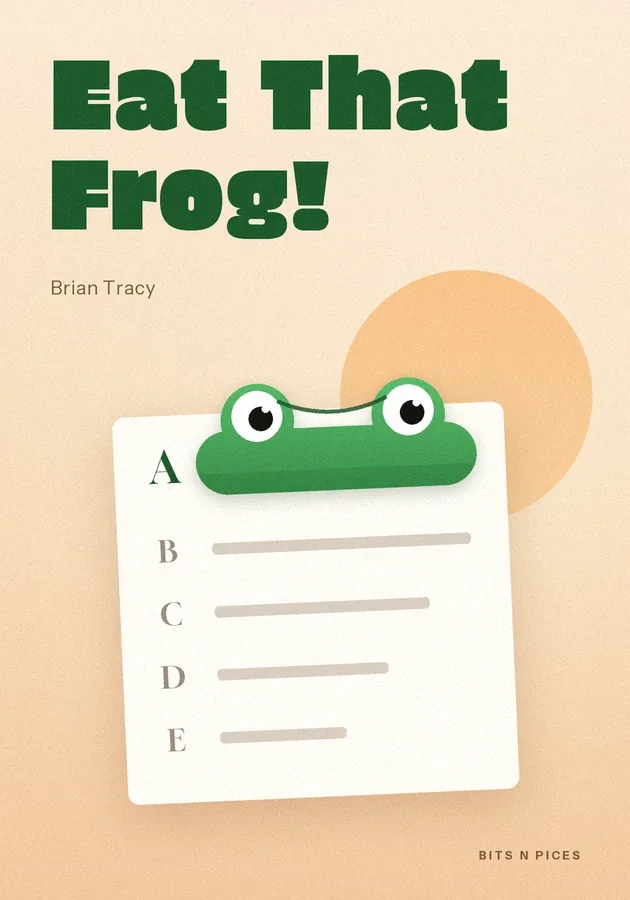
- Rank tasks by consequence with the ABCDE method and never touch a B before finishing an A
- Roughly 20% of your tasks produce 80% of your results, so guard those few
- Single-handle tasks to completion; starting and stopping wastes more time than the task itself
本篇内容
- Eat the ugliest frog first
There is an old saying that if the first thing you do each morning is eat a live frog, nothing worse can happen to you all day. Brian Tracy turns that joke into a method.
- Clarity on paper
Procrastination often hides a simple problem: you are not sure what you want. Tracy argues that clarity is the most important idea in personal productivity, and that writing goals down turns fuzzy hopes into something the mind can act on.
- Rank by consequence
Not all tasks deserve the same energy. Tracy leans on the familiar 80-20 rule: roughly 20% of what you do produces 80% of your results, so the trick is to identify that 20% and refuse to let the rest crowd it out.
- Prepare, then single-handle
Tracy spends several principles on removing friction. Before you start, get everything you need on the desk, clear the space and sit up straight, so that beginning takes no extra decisions.
- Build the skills that raise your value
Beyond daily tactics, Tracy wants you to think about which frogs you are able to eat at all. He argues that your weakest key skill sets the ceiling on your results, so identifying and improving it is high-leverage work.
- Put it to work
Tonight, write tomorrow's task list on paper and mark each item A, B, C, D or E. Circle the single A task with the biggest consequence; that is your frog.
六种学习方式
为本书专门编写了可视化、思维导图、练习、场景、挑战和复习模式。
语音朗读
聆听此内容,由 Michael 或 Bella 朗读。
测验与抽认卡
测试你的阅读成果,并通过间隔重复巩固记忆。
Bits AI
它可以根据你正在看的书籍、章节或测验题来回答。





