核心要点
- IQ opens doors, but handling emotions decides how far you actually go
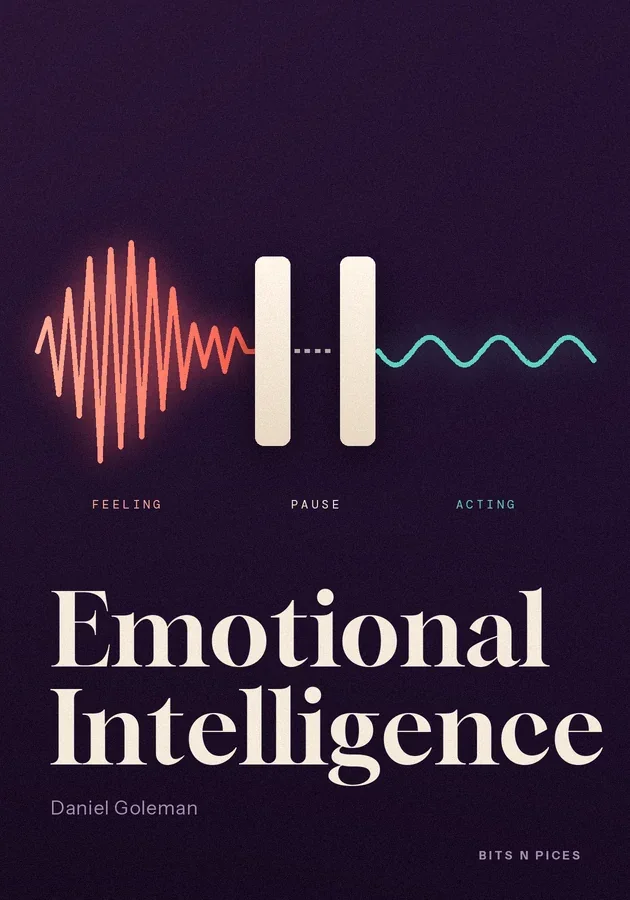
- An emotional hijack fires before thinking can catch up, so build a pause
- Naming a feeling as it happens is the foundation of every other skill
- Delaying gratification and staying hopeful predict success better than test scores
- Empathy is learned by reading faces and tone, not just by listening to words
本篇内容
- Why smart people still blow it
Think of the brilliant classmate who topped every exam and then struggled in every job, and the average student who now runs a team everyone wants to join. Daniel Goleman, a psychologist and science journalist, argues that the gap is explained by a set of abilities that schools barely measure: knowing your own feelings, managing them, motivating yourself, reading other people, and handling relationships.
- The hijack in your head
Why do you snap at a loved one over a small thing? Goleman explains that the brain has two routes for emotional information.
- Know yourself, then steer yourself
Goleman's framework begins with self-awareness: the ability to notice a feeling while it is happening, rather than an hour later. People who can name their emotions have a kind of neutral observer inside; they can say I am getting anxious instead of simply being anxious.
- The marshmallow and the flow state
The third domain is motivation, and here Goleman leans on Walter Mischel's famous marshmallow experiments. Four-year-olds who could wait for a bigger reward grew into teenagers who were more confident, more focused and better at coping with frustration.
- Reading others and handling them
The last two domains face outward. Empathy is the ability to sense what someone else feels, and Goleman shows it depends on reading nonverbal cues: tone, posture, the flicker across a face.
- Put it to work
This week, practise catching emotions early: three times a day, pause and name what you are feeling in one word, and notice where it shows up in your body. When you feel a hijack starting, buy time before you speak, whether by counting slowly, stepping out, or drafting the angry message but not sending it.
六种学习方式
为本书专门编写了可视化、思维导图、练习、场景、挑战和复习模式。
语音朗读
聆听此内容,由 Michael 或 Bella 朗读。
测验与抽认卡
测试你的阅读成果,并通过间隔重复巩固记忆。
Bits AI
它可以根据你正在看的书籍、章节或测验题来回答。