

核心要点
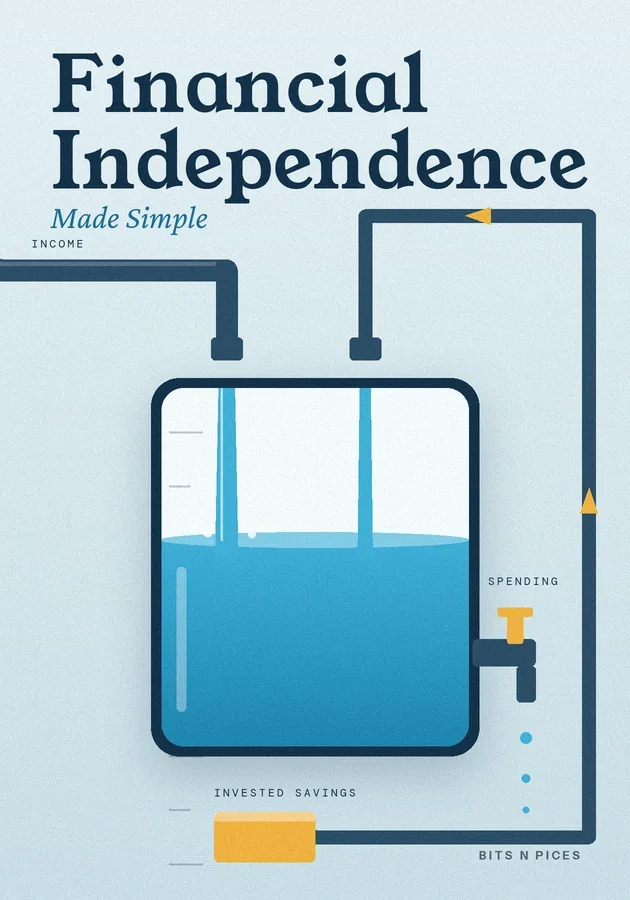
- Picture your money as a water tank: income fills it, spending drains it, and independence begins when invested savings keep it topped up.
- A handful of moves, paying yourself first, avoiding costly debt, keeping a buffer and investing steadily, do most of the work for a family.
- Cutting one large fixed cost usually beats a hundred small sacrifices, so start with housing, transport and big recurring bills.
- Children learn money habits mostly by watching, so let them see the plan, the waiting and the occasional calm no.
- When life wobbles, protect the buffer, pause, and talk as a family before any big decision, rather than reacting in a panic.
本篇内容
- Your money as a water tank
If money talk makes your head spin, picture a water tank on the roof. Salary is the inflow pipe.
- Five myths that keep families stuck
Myth one: you need a big salary. Independence depends on the gap between what comes in and what goes out, and plenty of high earners have a tank that empties every month.
- The few moves that do most of the work
You do not need to master every corner of finance. For most families a handful of moves produces most of the result.
- The family budget in plain words
A budget is not a cage; it is a plan for where the water goes before it starts flowing. The simplest version has three buckets: needs, such as housing, food and school costs; wants, such as outings and new gadgets; and future, meaning savings and investments.
- Snowballs: explaining growth and debt to children
Compounding sounds technical, but a snowball explains it. Roll a small ball down a snowy hill and it picks up more snow, then more, because a bigger ball has more surface.
- When life wobbles, keep it simple
Every family meets bumps: a job loss, a hospital bill, a market fall that fills the news. Under stress, complicated plans collapse and simple rules survive.
六种学习方式
为本书专门编写了可视化、思维导图、练习、场景、挑战和复习模式。
测验与抽认卡
测试你的阅读成果,并通过间隔重复巩固记忆。
Bits AI
它可以根据你正在看的书籍、章节或测验题来回答。





