

核心要点
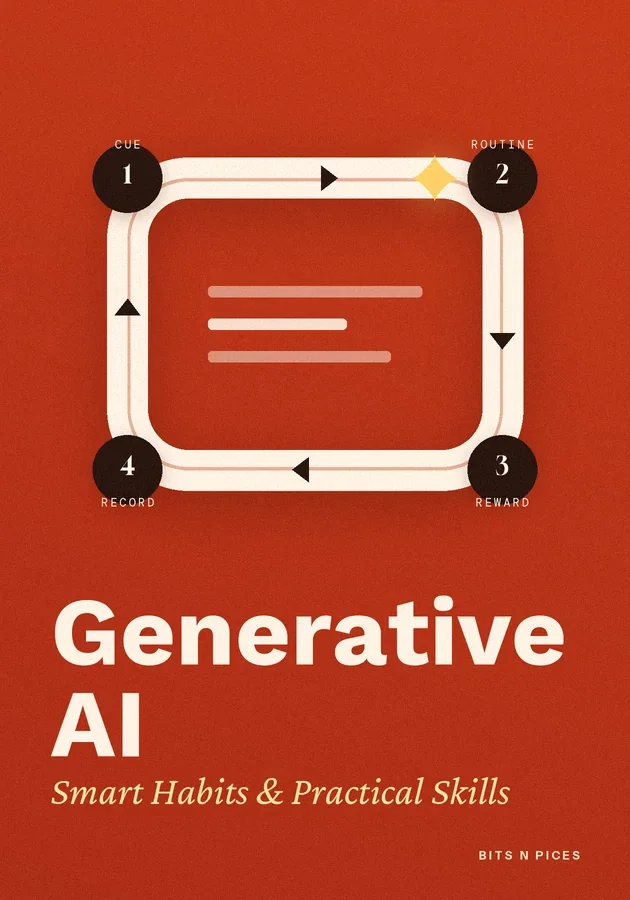
- Tricks live in memory and fade; a habit lives in the structure of the week, so design AI use with a cue, a routine, a reward and a record.
- Attach the tool to two moments the family already keeps, and make a child's cue a written question rather than an open screen.
- Move friction deliberately: keep a shared prompt notebook and named jobs for good uses, and put the chatbot on the living-room laptop, not the bedroom phone.
- Make checking a ritual with a fixed shape, three questions or a family game, so it runs by rule when everyone is tired.
- Keep a one-line record per use, review it monthly to prune, and when the habit slips restart the smallest version rather than the whole system.
本篇内容
- Why a habit beats a bag of tricks
Most parents who try generative AI collect tricks: a prompt for birthday invitations, a trick for summarising the school newsletter. Tricks fade because they live in memory.
- Cues: attaching the tool to moments you already have
A new habit needs a place to live, and the safest place is inside a routine you already keep. List the moments in your family week that always happen: packing lunches, homework hour, the drive to tuition, bill day, the Sunday plan.
- Friction: easy good uses, hard lazy ones
Habits follow the path of least effort, so the practical work is moving effort around. Lower the friction on uses you want.
- The checking habit as a family ritual
Verification is the habit most likely to slip, because the output looks finished and everyone is tired. So make it a ritual with a fixed shape.
- Tracking: knowing whether the habit is working
A habit without a record drifts, because memory flatters us. The tracking needed here is tiny: one line per use, saying what the job was, whether the output was used, and whether anything wrong was caught.
- Modelling it, and what to do when it slips
Children learn AI habits from watching yours. The most powerful teaching move is the think-aloud: use the tool in front of them and narrate.
六种学习方式
为本书专门编写了可视化、思维导图、练习、场景、挑战和复习模式。
测验与抽认卡
测试你的阅读成果,并通过间隔重复巩固记忆。
Bits AI
它可以根据你正在看的书籍、章节或测验题来回答。





