核心要点
- A manager's output is the output of the teams they influence, not their own tasks
- Pick high leverage activities: one hour that lifts many people's work for weeks
- Run regular one on ones where the report sets the agenda and you mostly listen
- Measure inputs early with indicators, and pair every metric with a counter metric
- Train your people yourself; low motivation and low skill are the only two causes of poor performance
本篇内容
- Management as a production line
Picture a small breakfast cafe that has to serve a soft boiled egg, toast and coffee together, hot, within a few minutes. The egg takes longest, so everything else has to be timed around it.
- Your output is your team's output
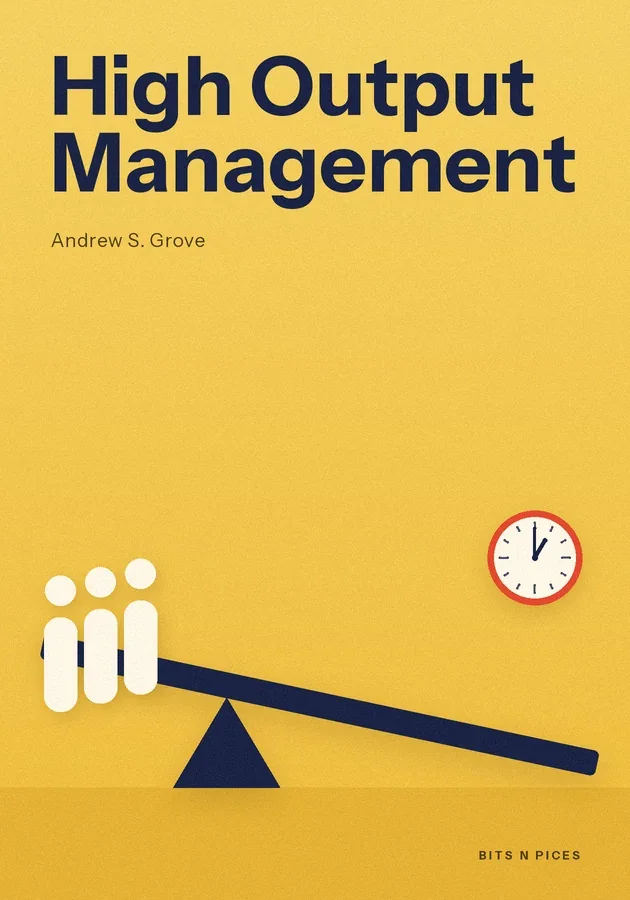
Grove's core equation is simple: a manager's output equals the output of their own team plus the output of the neighbouring teams they influence. Nothing you do alone counts unless it raises what those groups produce.
- Hunt for leverage
Some activities multiply and some barely add, and Grove calls the ratio leverage. High leverage moves affect many people, or affect one person for a long time.
- The one on one meeting
Grove's most copied idea is the regular one on one between a manager and each direct report. Its purpose is mutual teaching and exchange of information, not status updates you could read in an email.
- Indicators, forecasts and paired metrics
If you only look at final results, you learn about problems after they are expensive. Grove wants managers to watch a few leading indicators every morning, the way a factory checks raw material and machine downtime before the finished goods arrive.
- Put it to work
This week, write down what your team actually produces and which single step limits it, then plan around that step. Look at last week's calendar and mark each block as high, low or negative leverage; move one hour from the low column to the high column.
六种学习方式
为本书专门编写了可视化、思维导图、练习、场景、挑战和复习模式。
语音朗读
聆听此内容,由 Michael 或 Bella 朗读。
测验与抽认卡
测试你的阅读成果,并通过间隔重复巩固记忆。
Bits AI
它可以根据你正在看的书籍、章节或测验题来回答。