

核心要点
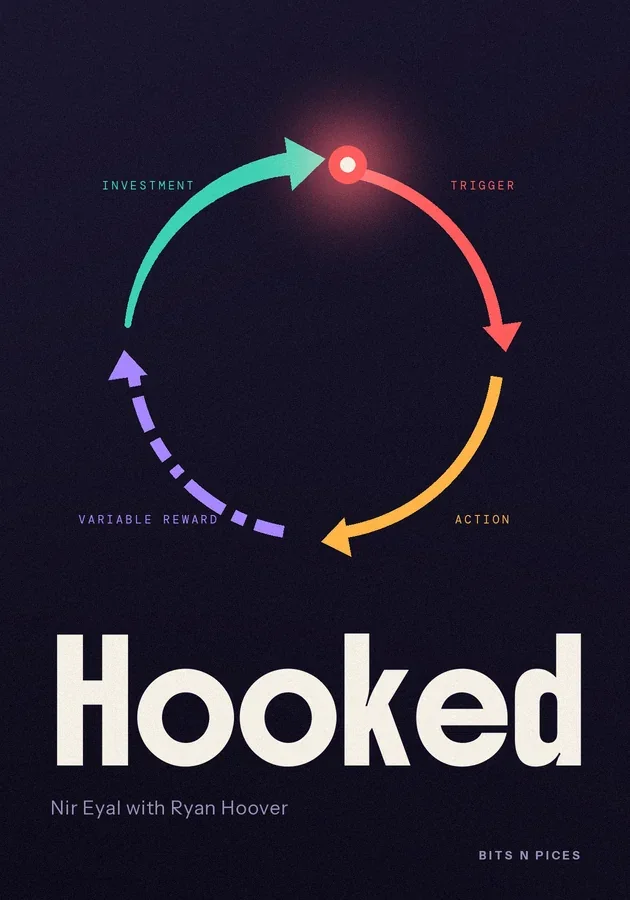
- Habit forming products run a loop of trigger, action, variable reward and investment
- External triggers get attention, but only internal triggers tied to emotions create lasting habits
- The easier an action is to complete, the more likely it happens when motivation is present
- Unpredictable rewards keep people coming back far more than predictable ones
- Each bit of effort a user invests, from data to followers, makes leaving harder
本篇内容
- Why some apps feel like reflexes
Think about the last time you unlocked your phone. Did you decide to open Instagram or WhatsApp, or did your thumb just go there?
- Triggers, from outside to inside
Every hook begins with a trigger, a cue that tells you what to do next. External triggers live in the world: a notification, an email, an icon on the home screen, a friend saying you must try this.
- Make the action easier than thinking
After the trigger comes the action, the simplest behaviour done in anticipation of a reward: scrolling a feed, tapping a like, hitting search. Eyal draws on the behaviour model of researcher BJ Fogg, which says an action happens when motivation, ability and a trigger arrive together.
- Rewards that you cannot predict
Why do people keep pulling the lever? Because they do not know what they will get.
- Investment closes the loop
The last step is the one most products forget. After the reward, the user does a little work that makes the product better for them next time: following accounts, saving a playlist, adding contacts, typing a profile, uploading photos.
- Put it to work
This week, take one product you work on or use and write out its hook: what triggers use, what the smallest action is, what reward arrives, and what the user invests afterwards. Find the internal trigger by asking what feeling sends people to the product, then check whether the reward truly relieves it.
六种学习方式
为本书专门编写了可视化、思维导图、练习、场景、挑战和复习模式。
语音朗读
聆听此内容,由 Michael 或 Bella 朗读。
测验与抽认卡
测试你的阅读成果,并通过间隔重复巩固记忆。
Bits AI
它可以根据你正在看的书籍、章节或测验题来回答。





