

核心要点
- Your ikigai is the reason you get up, and it need not be grand
- Long-lived communities stay active, eat lightly and never fully retire from purpose
- Flow comes from tasks slightly harder than your skill, done without distraction
- Small daily rituals and close friendships protect both body and mind over decades
- Accept what you cannot control, act anyway, and let setbacks make you stronger
本篇内容
- A reason to get up
In a village on the Japanese island of Okinawa, an unusual number of people live past 100. They garden, they sing, they meet friends, and almost none of them ever retire in the way we understand it.
- Where your four circles meet
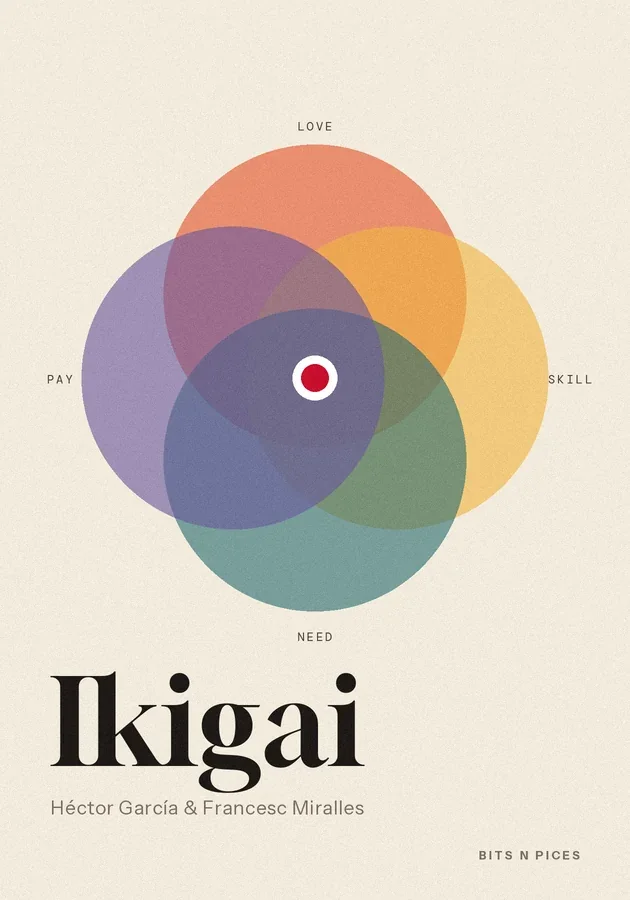
The book popularised a simple diagram. Draw four overlapping circles: what you love, what you are good at, what the world needs, and what you can be paid for.
- Lessons from the long-lived
Why do some places produce so many centenarians? The authors point to a cluster of habits rather than one secret.
- Finding flow in your work
Have you ever looked up from a task and found that 2 hours had vanished? Psychologists call that state flow, and the authors treat it as ikigai in action.
- Resilience and gentle acceptance
Long lives contain losses, so the authors spend time on how to bend without breaking. They draw on Viktor Frankl, who found that people who had a reason to live could survive the worst conditions, and on the Japanese therapist Shoma Morita, who taught patients to accept their feelings and act anyway rather than wait to feel ready.
- Put it to work
This week, write your four circles on one page and list 3 things in each, then look for what appears more than once. Pick one small daily movement habit, such as a 15 minute walk after dinner, and do it every day without turning it into a performance goal.
六种学习方式
为本书专门编写了可视化、思维导图、练习、场景、挑战和复习模式。
语音朗读
聆听此内容,由 Michael 或 Bella 朗读。
测验与抽认卡
测试你的阅读成果,并通过间隔重复巩固记忆。
Bits AI
它可以根据你正在看的书籍、章节或测验题来回答。





