

核心要点
- Offload what you only need to find, such as dates, forms and keys, and train what you need to know with recall and spacing.
- Give keys, school bags and signed forms one launch pad by the door, and review the family calendar together every Sunday evening.
- After homework reading, close the book for five minutes while your child tells you everything they remember, then check the gaps together.
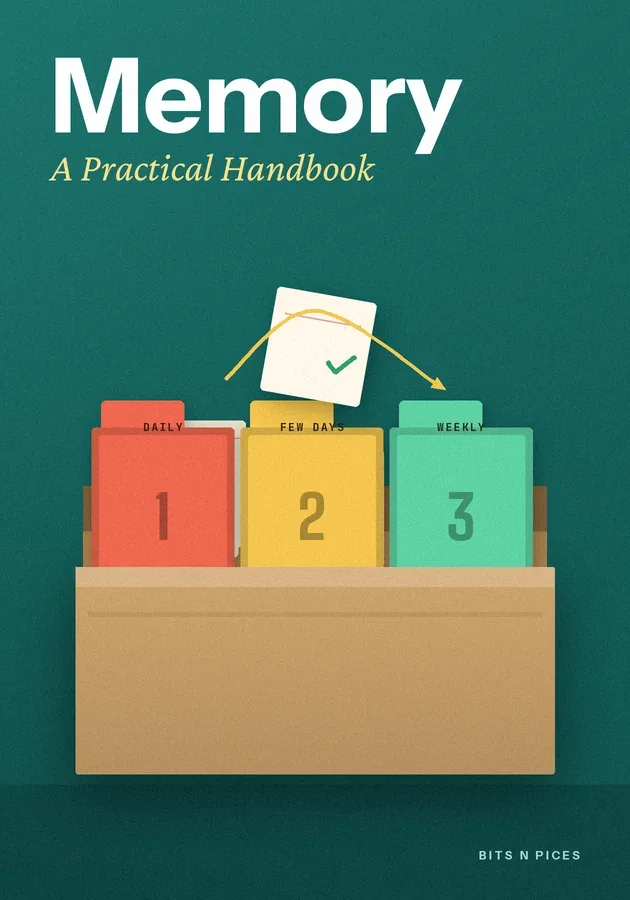
- Run a three-box card system: new and missed cards daily, cards answered once every few days, secure cards once a week.
- Use pictures, stories and familiar rooms for lists and order, but pair every trick with understanding and a steady bedtime.
本篇内容
- Offload or train: the two jobs of family memory
A busy household asks memory to do two different jobs. Some things only need to be found at the right moment: a dentist appointment, the day the library books are due, the form that must come back signed.
- Setting up a launch pad, calendar and checklists
Three tools handle most of the offloading, and each takes one evening. First, the launch pad: a shelf, hook or basket by the door where everything that leaves the house lives, from keys and school bags to library books and signed forms.
- The five-minute recall routine for homework
One of the most useful memory habits you can build with a child takes five minutes and no equipment. It uses retrieval practice, which means bringing information back out of memory without looking; the effort of doing so makes the memory stronger than reading it again.
- A spacing schedule you can run from a shoebox
Spacing means returning to material after gaps instead of practising it all at once, and it is easiest to run with cards and three boxes or envelopes. Write a question on the front of each card and the answer on the back.
- Pictures, stories and rooms for remembering lists
Memory tricks, also called mnemonics, work by giving plain information a vivid hook. A first-letter sentence turns a list into a silly sentence whose words start with the same letters, which keeps the order.
- Sleep, routines and knowing when to ask
Tools and tricks work best inside a steady week. New memories settle over the hours after learning, much of it during sleep, so a predictable bedtime supports homework more than extra late practice does.
六种学习方式
为本书专门编写了可视化、思维导图、练习、场景、挑战和复习模式。
测验与抽认卡
测试你的阅读成果,并通过间隔重复巩固记忆。
Bits AI
它可以根据你正在看的书籍、章节或测验题来回答。





