

核心要点
- Speaking skill cools between big talks, so keep it warm with two or three small weekly habits instead of a panicked weekend before each one.
- Attach practice to cues your family already has, such as Wednesday dinner, the school run or the weekly team meeting, so nobody has to remember it.
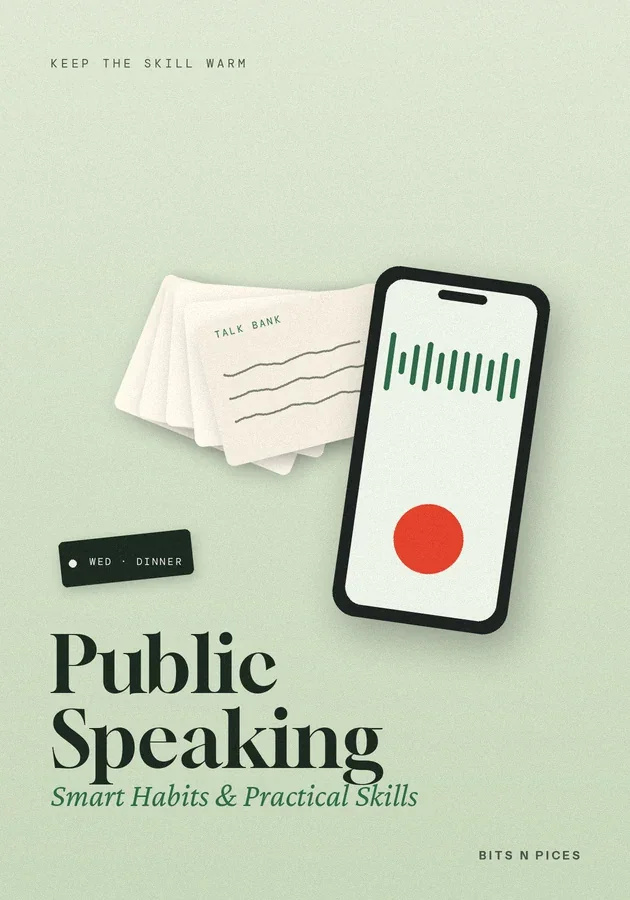
- Cut friction with a ready kit: a talk bank of stories on your phone, an opening menu and a recorder one tap away.
- Hide small practice inside routines you already have, such as reading aloud at bedtime and sending point-first voice notes, so skills stay warm.
- Track attempts rather than ratings for everyone at home, and after a busy season restart at the smallest version on the next usual cue.
本篇内容
- Why speaking skill fades between big talks
Most adults speak in public a few times a year, and the pattern is familiar. A talk is announced, a weekend disappears into anxious preparation, the talk goes reasonably well, and then nothing happens for months.
- Cues that turn ordinary moments into practice
A habit needs a cue, something that already happens reliably, and a tiny action attached to it. Write it as a plan: when this happens, I will do that.
- Lowering friction with a talk bank and kit
Friction is anything that makes starting harder, such as hunting for a story or staring at a blank page. Remove it in advance with a small kit.
- Hidden practice in ordinary family routines
Between big talks, the skills that matter most are pace, pausing, structure and speaking up, and each can be practised inside routines you already have. Reading aloud at bedtime trains pace and pauses: read slower than feels natural, stop at every full stop, give each character a voice, and let the child read the last page back to you.
- Tracking tries without killing the joy
What you track shapes what people do, so track attempts, not ratings. A simple tally works: talks given, times you spoke first in a meeting, recordings you listened back to.
- Keeping the habit alive through busy seasons
Every family has seasons that break routines: exam months, festivals, month-end at work, a new baby, relatives visiting. The habit that survives is the one with a smallest version decided in advance: one minute of speaking aloud on the usual cue, one volunteer at dinner instead of everyone, one line in the talk bank.
六种学习方式
为本书专门编写了可视化、思维导图、练习、场景、挑战和复习模式。
测验与抽认卡
测试你的阅读成果,并通过间隔重复巩固记忆。
Bits AI
它可以根据你正在看的书籍、章节或测验题来回答。





