

核心要点
- Learn any skill by imitating the best, rewriting from memory and comparing
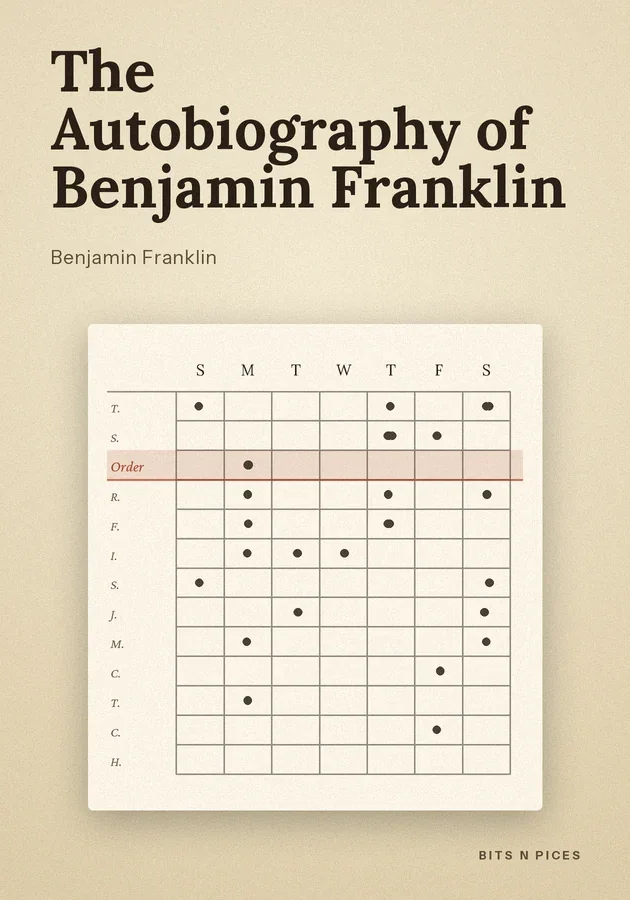
- Track your virtues on a simple grid and work on one at a time
- Reputation is built by what people see you doing every day
- Speak with modest words and people will stop resisting your ideas
- Share the credit for projects and you will get more of them done
本篇内容
- A self-made life told plainly
A teenage runaway walks into Philadelphia with a few coins, buys three bread rolls and wanders the streets eating one with the others under his arms. The girl watching him laugh will later become his wife.
- Teach yourself by imitation
Franklin left school at 10 and learned to write by copying the best. He took essays from an English magazine he admired, made short notes on each, put them away for days, then tried to rebuild the essays from the notes in his own words.
- Thirteen virtues in a ledger
Franklin wanted to be morally perfect and, being practical, he built a system. He listed 13 virtues, among them temperance, silence, order, frugality, industry, sincerity and humility, and gave each a short rule.
- Industry, frugality and reputation
Franklin built his printing business on two virtues and one insight. The virtues were industry and frugality: work long hours, avoid debt, spend little.
- Persuade gently, build together
Young Franklin loved to win arguments and noticed it made him enemies. So he changed his speech, dropping words like certainly and undoubtedly, and saying instead that he imagined a thing to be so, or that it seemed to him.
- Put it to work
Pick one piece of writing you admire, make notes on it, wait 3 days and rewrite it from the notes, then compare. Draw a grid of 5 habits you want against the days of this week and mark each lapse with a dot; tackle only one habit at a time.
六种学习方式
为本书专门编写了可视化、思维导图、练习、场景、挑战和复习模式。
语音朗读
聆听此内容,由 Michael 或 Bella 朗读。
测验与抽认卡
测试你的阅读成果,并通过间隔重复巩固记忆。
Bits AI
它可以根据你正在看的书籍、章节或测验题来回答。





