

核心要点
- Five ideas cover almost everything about AI tools: pattern machines, four tool families, request shapes result, the trade-off triangle, and the human owner.
- Every AI tool is a pattern machine that produces the likely answer, not the true one, so fluency tells you nothing about accuracy.
- Sort any new tool into one of four families, chat, generate, transform or built-in, and you will know what it is for and where its risks sit.
- Speed, accuracy and privacy pull against each other; decide which corner a job needs most before you pick the tool and the way you use it.
- Prioritise one tool learned deeply, a checking habit and a few reusable requests; ignore leaderboards, version numbers and secret prompt tricks.
本篇内容
- The map: five ideas that cover the territory
Daniel supervises a night shift at a warehouse in Leeds and reads the news on his breaks. Every week brings a new AI tool, a new warning and a new promise.
- Idea one: pattern machines, not oracles
An oracle knows things and tells you. A pattern machine has seen a vast amount of text, images or sound and produces whatever would most plausibly come next.
- Idea two: the four families of tools
New tools arrive weekly, but they belong to four families, and the family tells you what a tool is for. Chat assistants hold a conversation and draft, explain, plan and answer.
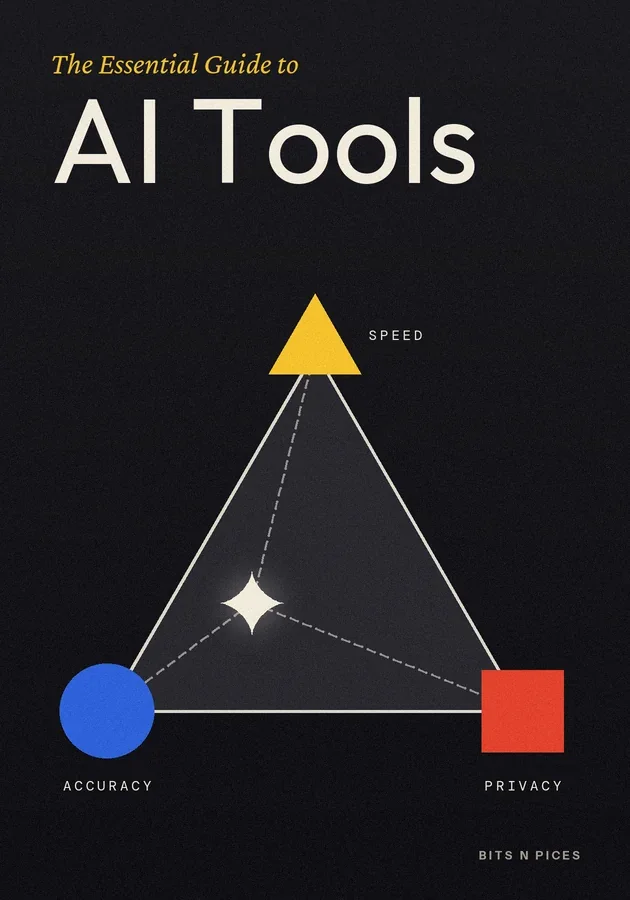
- Idea three: the trade-off triangle
Draw a triangle with speed at one corner, accuracy at the second and privacy at the third. Every use of an AI tool sits somewhere inside it, and moving towards one corner moves you away from another.
- Idea four: what to prioritise and what to ignore
The map is only useful if it tells you where not to go. Prioritise three things.
- How the five ideas fit together
Here is the whole guide in one sentence. Because AI tools are pattern machines, they belong to families with different jobs and risks, your request is the lever that shapes what comes back, every job trades speed against accuracy and privacy, and you remain the owner of whatever leaves your hands.
六种学习方式
为本书专门编写了可视化、思维导图、练习、场景、挑战和复习模式。
测验与抽认卡
测试你的阅读成果,并通过间隔重复巩固记忆。
Bits AI
它可以根据你正在看的书籍、章节或测验题来回答。





