

核心要点
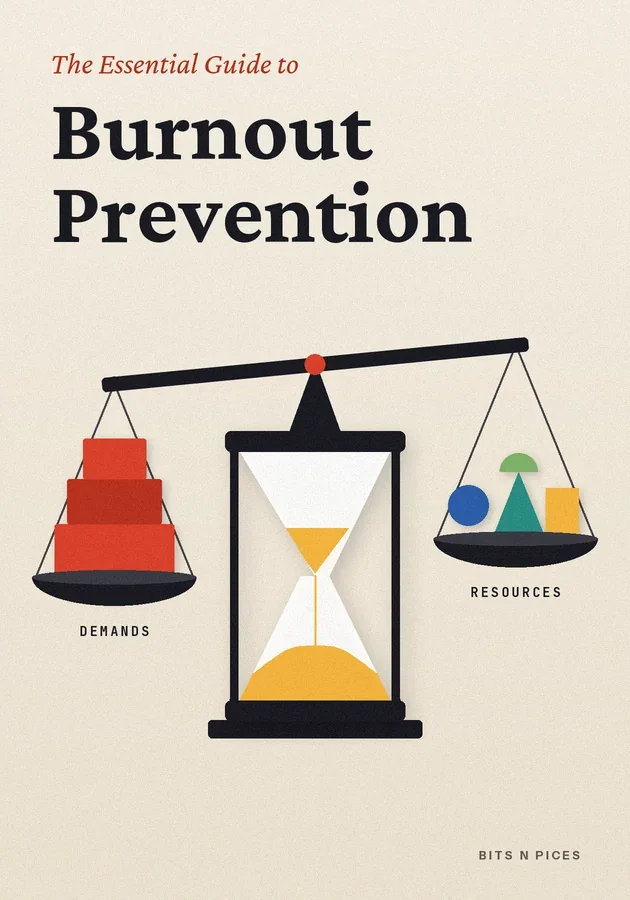
- Burnout follows a simple balance: sustained demands on one side, resources and recovery on the other, and time deciding which side wins.
- Recovery works best when it combines mental switch-off, genuine relaxation, a small challenge you enjoy and some control over your free time.
- Gaining a little more control over how and when you work can protect you as much as a lighter workload.
- Caring deeply about your work protects you until it stops you resting, so keep one part of life that has nothing to do with your job.
- Prioritise sleep, early workload conversations and people you trust, and ignore wellness purchases that leave the underlying load untouched.
本篇内容
- The whole map in one picture
Most of what matters about burnout fits into one balance. On one side sit demands: workload, time pressure, emotional strain, conflict, caring duties.
- Recovery has four ingredients
Recovery is not the same as doing nothing. Research on how people refill after work points to four experiences that matter.
- Control and fairness, the quiet drivers
Two resources are easy to overlook because they do not show up in hours worked. The first is control: some say over the order, pace and method of your work.
- When meaning protects and when it harms
Caring about your work is one of the strongest buffers against burnout. People who see purpose in what they do tolerate hard days better and bounce back faster.
- What to prioritise and what to ignore
With limited energy, order matters. Three things deserve priority because they affect everything else.
- Reading the signals and knowing the limits
Burnout rarely arrives suddenly, so the early signals are worth learning. Exhaustion usually comes first, then growing distance or irritation, and last a feeling that your work no longer counts.
六种学习方式
为本书专门编写了可视化、思维导图、练习、场景、挑战和复习模式。
测验与抽认卡
测试你的阅读成果,并通过间隔重复巩固记忆。
Bits AI
它可以根据你正在看的书籍、章节或测验题来回答。





