

核心要点
- Most emerging technology fits into five families: learning machines, connected sensors, immersive screens, digital trust and money, and new energy and biology.
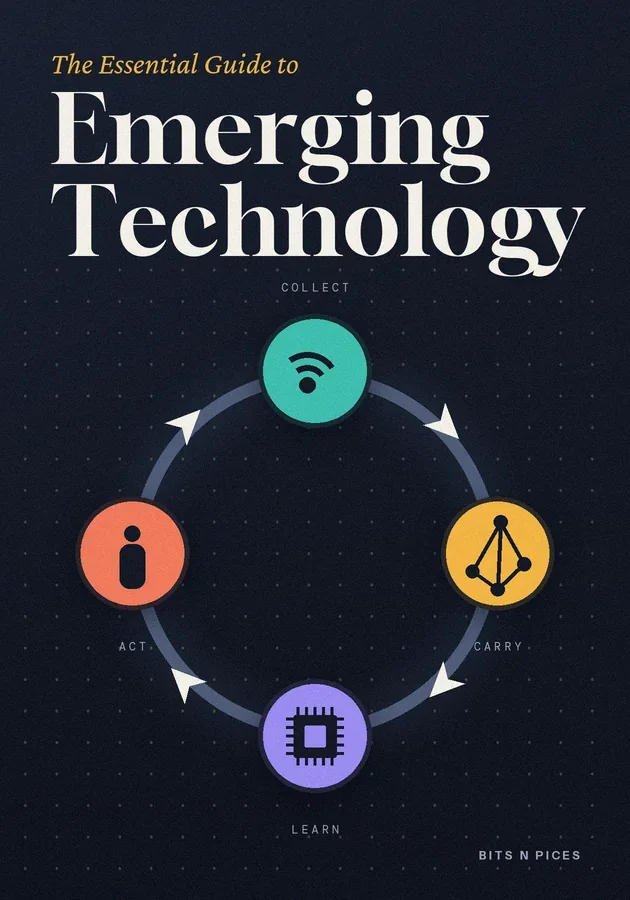
- The families usually work as one loop, where sensors collect data, networks carry it, software learns from it and a machine or person acts.
- Judge maturity by boring signals such as falling prices, rules from regulators and people using it without noticing, not by loud launch events.
- Every new tool carries a cost column of privacy, security, energy, jobs and dependence, so read that column before you adopt anything.
- Put your learning time into data sense, basic AI use and security habits, and let speculative tokens and first-version gadgets wait.
本篇内容
- Emerging is a stage, not a look
A technology is emerging when it works well enough to use but is still changing fast, getting cheaper and finding its jobs. The word says nothing about how impressive it looks.
- Five families on one map
Hundreds of new products appear every year, but most belong to five families. Learning machines are software that finds patterns in data and makes predictions, from spam filters to tools that draft letters.
- How the families feed each other
The families rarely work alone. Most useful systems chain them into a loop: sensors collect data, networks carry it, learning machines find patterns in it, and a device or a person acts on the result.
- Separating real progress from hype
Launch events are loud, and loudness is a poor guide to maturity. A better guide is a set of boring signals.
- The cost column nobody prints
Every new tool arrives with a benefits column in large type. The costs sit in a column nobody prints, and reading it is your job.
- What to learn now and what to skip
Three skills pay off across all five families and will outlast any single product. Data sense means asking where numbers come from and what a prediction is based on.
六种学习方式
为本书专门编写了可视化、思维导图、练习、场景、挑战和复习模式。
测验与抽认卡
测试你的阅读成果,并通过间隔重复巩固记忆。
Bits AI
它可以根据你正在看的书籍、章节或测验题来回答。





